
Argentina: Reaching for the Sky in the Andes
Why High-Altitude Farming Creates the World’s Best Malbec
12/11/20253 min read
Welcome to the land of Tango, Football, and Asado! Argentina is a country of intense passion, and its wines reflect that perfectly. While it has been producing wine for centuries, Argentina exploded onto the global scene in the last 20 years, capturing the world's palate with one word: Malbec.
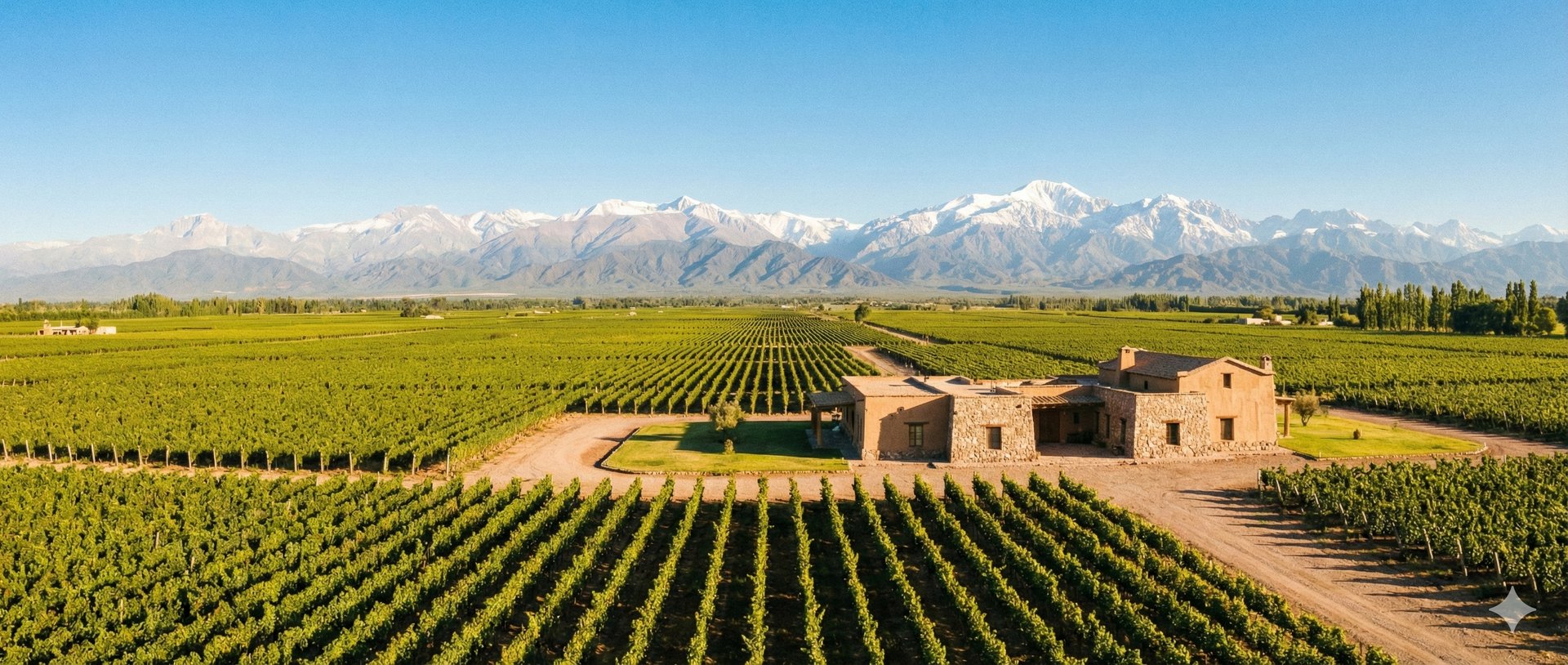
But Argentina is more than just one grape. It is a story of extreme geography. With vineyards planted at some of the highest elevations on the planet, nestled against the snowy peaks of the Andes Mountains, Argentine wine is literally "high quality."
A Sip of History: The Italian Influence
While the Spanish brought the first vines, it was the massive wave of Italian immigrants in the 19th and 20th centuries that shaped the culture. They brought a love for wine as an everyday food.
For a long time, Argentina focused on quantity, producing huge amounts of table wine for domestic consumption. The turning point came in the 1990s, led largely by visionaries like Nicolás Catena Zapata. He proved that by planting vines higher up the mountains and reducing yields, Argentina could produce wines that rivaled the best of Bordeaux and Napa Valley.
The Secret Weapon: High-Altitude Viticulture
To understand Argentine wine, you must understand altitude. In most of the world, vineyards are found near sea level. In Argentina, they climb to 3,000, 4,000, or even 5,000 feet (1,500 meters) above sea level.
Why does height matter?
Intense Sunlight: The air is thinner, so the UV radiation is stronger. The grapes develop thicker skins to protect themselves. Thicker skins mean more color and more tannins.
Thermal Amplitude: This is the temperature difference between day and night. Days are hot, but nights are freezing. This stops the ripening process at night, preserving the acidity (freshness) in the grapes.
The Result: Wines that are incredibly ripe and powerful, yet fresh and easy to drink.
Major Wine Regions: The Desert Oases
Argentina is vast, but the wine industry is concentrated in the west, along the Andes.
1. Mendoza
This is the heart and soul of the industry, producing over 70% of the country's wine.
Luján de Cuyo: Known as the "Land of Malbec," producing lush, soft, and fruity wines.
Uco Valley: The trendy, higher-altitude sub-region. Wines here are more floral, mineral, and structured.
2. Salta (Cafayate)
Located in the far north. This region is home to some of the highest vineyards in the world.
The Style: Intense, aromatic white wines and powerful, concentrated reds.
3. Patagonia
Located in the south. It is lower in altitude but much further from the equator, making it a cool, windy region.
The Style: Elegant Pinot Noir and crisp whites that feel more European in style.
The Grapes: The King and The Queen
Argentina has a clear star, but the supporting cast is excellent.
Top Red Grapes
Malbec: The undisputed King. Originally a minor grape in France (Cahors), it found its true home in Argentina. It offers flavors of plum, blackberry, and chocolate with a velvety texture that everyone loves.
Bonarda: The second most planted red. It makes fruity, easy-drinking wines, though high-quality versions are emerging.
Cabernet Sauvignon: Often blended with Malbec to add structure and aging potential.
Top White Grapes
Torrontés: The Queen of Argentina. This is a native grape found nowhere else. It smells incredibly sweet (like roses and lychees) but tastes bone-dry. It is a mind-bending experience!
Chardonnay: Especially from the high-altitude Uco Valley, producing crisp, mineral-driven wines.
Production Statistics
Argentina is a heavyweight champion. According to recent data from the OIV:
Global Rank: Argentina is typically the #5 or #6 largest wine producer in the world.
Volume: Producing approximately 10 to 12 million hectoliters annually.
Consumption: Argentines love their wine (almost as much as they love beef). They consume a large portion of their own production domestically.
Renowned Producers and Wineries
The industry is a mix of historic families and modern pioneers.
Catena Zapata: The most important winery in Argentina. Their "pyramid" winery in Mendoza is an icon. They put high-altitude Malbec on the map.
Bodega Norton: A historic producer known for consistent quality and excellent value.
Zuccardi Valle de Uco: Famous for their stunning stone winery and their focus on "mountain wines" that express the soil.
Achaval Ferrer: Known for old-vine Malbecs with incredibly low yields and high concentration.
Rutini: A prestigious brand that is a staple on high-end restaurant lists across Argentina.
Iconic Wines: The Pride of the Andes
1. Adrianna Vineyard "River Stones" Malbec (Catena Zapata)
A single-vineyard wine from the Uco Valley. It has received 100-point scores from major critics, proving Malbec can be a "Grand Cru" wine.
2. Cheval des Andes
A luxury blend of Malbec and Cabernet Sauvignon. It is a joint venture between Château Cheval Blanc (of Bordeaux) and Terrazas de los Andes.
3. Cobos Malbec (Viña Cobos)
Made by American winemaker Paul Hobbs. This is a massive, powerful, and expensive wine that shows the full potential of the grape.
Conclusion: The Perfect Steak Partner
There is an old saying: "What grows together, goes together." It is no coincidence that Argentina produces the world's best beef and the world's best Malbec. They are a match made in heaven. Whether you are at a fancy steakhouse or a backyard BBQ, a bottle of Argentine Malbec brings warmth, joy, and a taste of the mountains to your glass. Salud!