

Bubbles and Science: The Art of Sparkling Winemaking
2/15/20262 min read
The magic of sparkling wine lies in a simple scientific fact: when yeast consumes sugar, it produces alcohol and Carbon Dioxide (CO2). In a regular "still" wine, that gas is allowed to escape. In a sparkling wine, the winemaker captures it.
However, creating a high-quality sparkling wine is far from simple. It requires a second fermentation in a closed environment to trap the bubbles inside the liquid. Depending on where and how this second fermentation happens, the wine will develop completely different textures and aromas. Let’s explore the three most important methods that define the world’s most famous bubbles.
1. The Traditional Method (Méthode Champenoise)
This is the most prestigious and labor-intensive way to make sparkling wine. It is the mandatory method for Champagne, Cava, and Franciacorta.
In this process, the second fermentation happens inside the individual bottle you buy at the store. After the base wine is bottled, a mixture of sugar and yeast (the liqueur de tirage) is added, and the bottle is sealed with a crown cap. As the yeast works, the CO2 dissolves into the wine, creating fine, persistent bubbles.
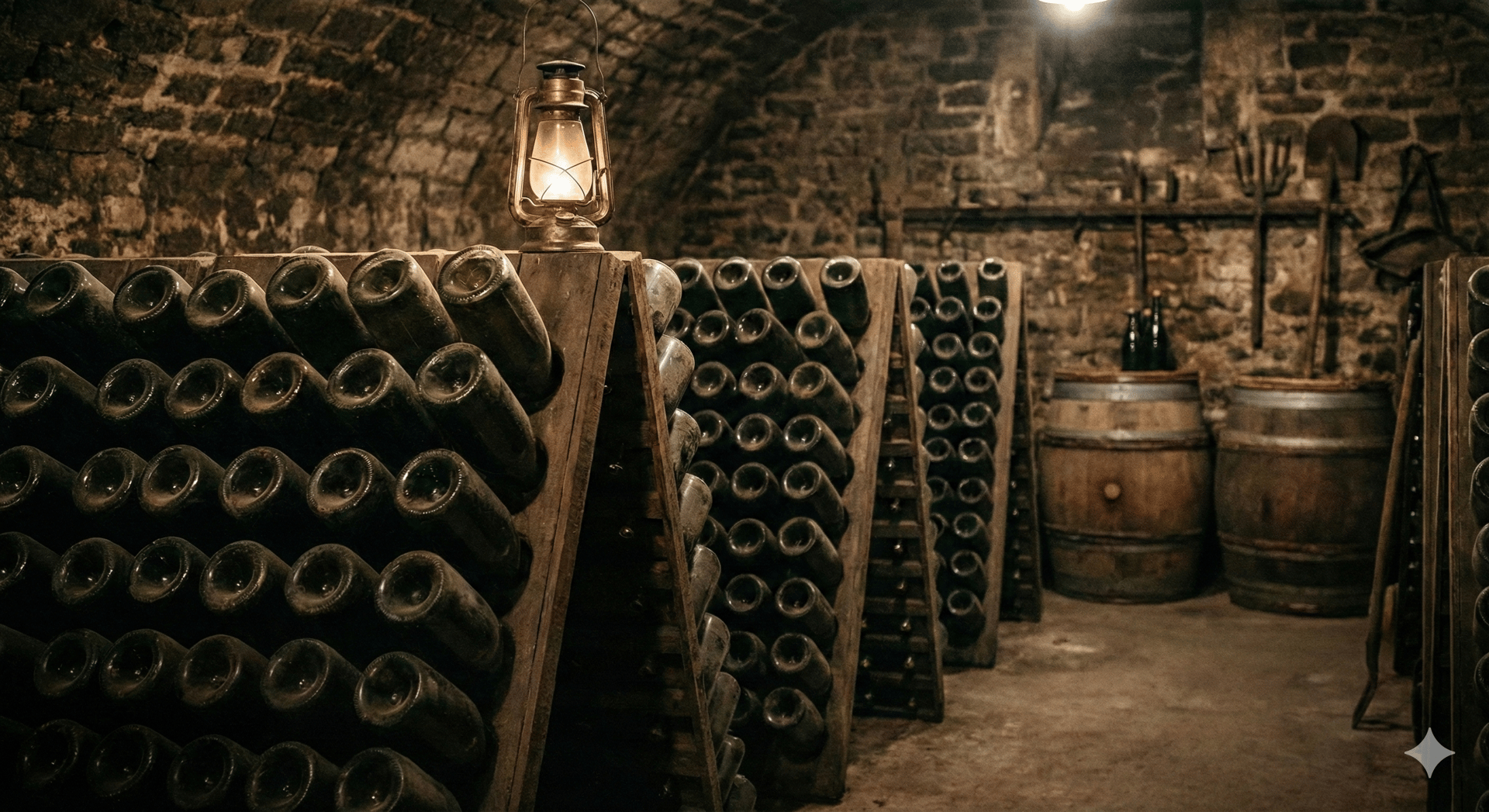
The wine then rests "on the lees" (dead yeast cells) for months or even years. This stage, called autolysis, is what gives Traditional Method wines their famous aromas of toasted bread, brioche, and nuts. Before the final cork is added, the bottles undergo "riddling" (turning them upside down to move the sediment to the neck) and "disgorgement" (freezing the neck to pop the sediment out). It is a slow, expensive, but undeniably superior method for complexity.
2. The Tank Method (Charmat Method)
Named after its inventor, Eugene Charmat, this method is most famous for producing Prosecco. Here, the second fermentation takes place in large, pressurized stainless steel tanks rather than individual bottles.
Once the desired pressure is reached, the wine is filtered and bottled under pressure. Because the wine spends less time in contact with the yeast, the Charmat Method preserves the "primary" aromas of the grapes. This results in wines that are fresh, fruity, and floral—perfect for young, easy-drinking styles. It is also a much more efficient and affordable process, which is why Prosecco has become the world’s favorite everyday sparkling wine.
3. The Ancestral Method (Pét-Nat)
This is the oldest way of making sparkling wine, and it is currently enjoying a massive comeback under the name Pétillant Naturel (or Pét-Nat).
Unlike the other two methods, there is no second fermentation here. The winemaker bottles the wine while it is still in its first fermentation. The fermentation finishes inside the bottle, trapping the remaining CO2.
The Ancestral Method is often unpredictable and "wild." The wines are usually cloudy because the sediment is not removed, and they tend to have lower pressure and a slight natural sweetness. It is the ultimate "natural" sparkling wine, prized for its rustic charm and pure fruit expression.
The Importance of "Dosage"
At the very end of the Traditional and Charmat processes, winemakers often add a small amount of sugar called the liqueur d'expédition. This determines the sweetness level of the wine, which you see on the label:
Extra Brut / Brut Nature: Little to no added sugar; very dry.
Brut: The most common style; dry but balanced.
Demi-Sec: Noticeably sweet, often paired with desserts.
A Style for Every Occasion
Understanding the method behind the bubbles helps you choose the right bottle for the right moment. If you want complexity, yeastiness, and elegance for a grand celebration, the Traditional Method is your choice. If you want something bright, aromatic, and refreshing for a sunny afternoon, the Charmat Method shines. And if you are in the mood for something fun, cloudy, and artisanal, the Ancestral Method awaits. Each bubble is a result of a careful choice in the cellar, proving that winemaking is where nature meets human precision.