

Decoding the Bouquet
Primary, Secondary, and Tertiary Aromas
SERVICE & TASTE
2/26/20263 min ler
Did you know that up to 80% of what we perceive as "flavor" actually comes from our sense of smell? While our tongues are limited to basic sensations like sweet, sour, salty, and bitter, our olfactory system can detect thousands of volatile aromatic compounds.
In wine tasting, we don't just "smell wine." We use our noses to extract a layered history of the liquid. These layers are categorized into three distinct tiers: Primary, Secondary, and Tertiary aromas. Learning to separate these layers is like peeling back the skin of an onion—each one reveals more about the wine’s origin and its journey from the vineyard to your glass.
Tier 1: Primary Aromas (The Fruit and the Earth)
Primary aromas come directly from the grape variety itself and the environment where it was grown (the terroir). These are the freshest and most immediate scents you will encounter.
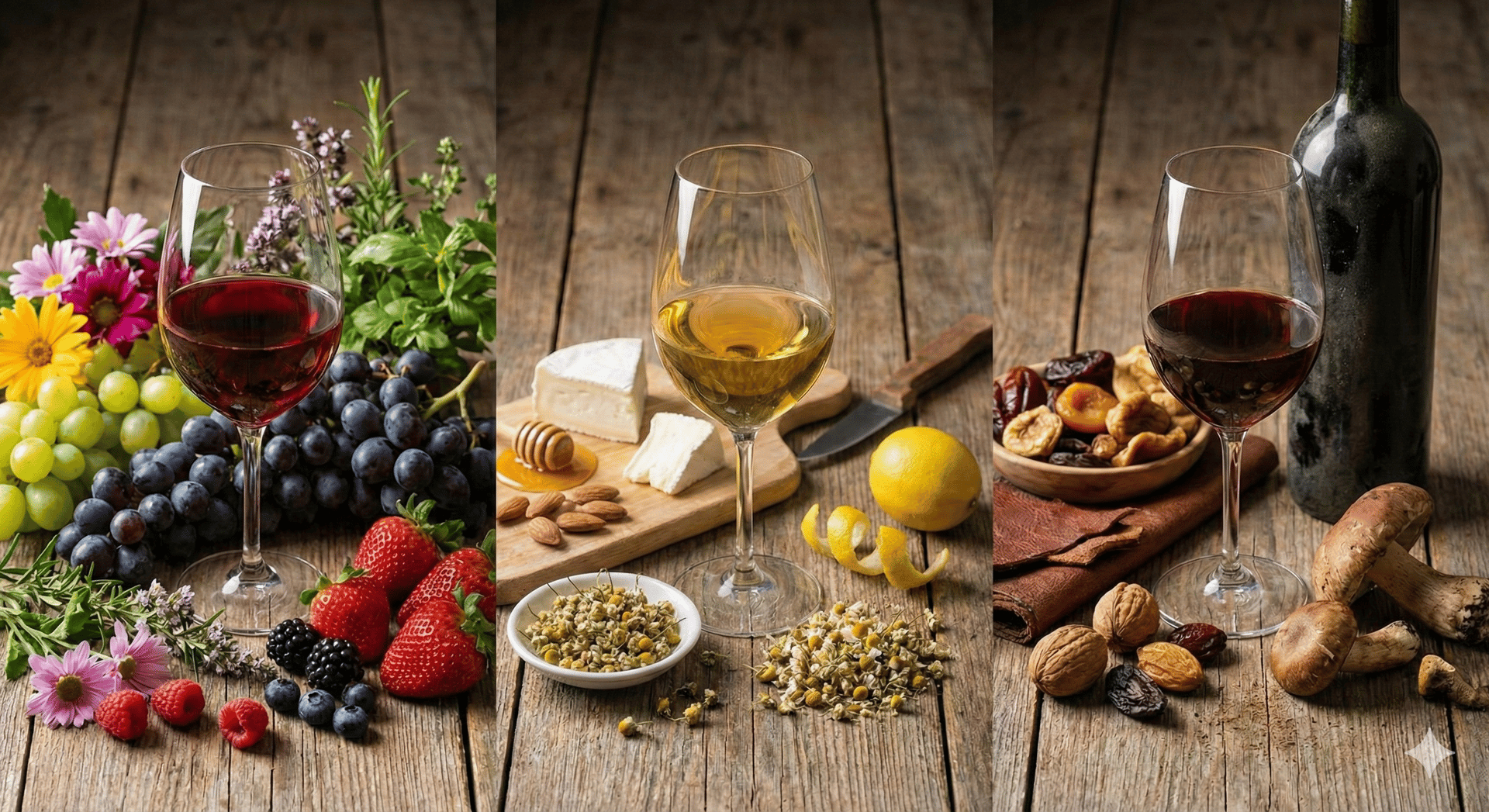
Fruit Categories: This is usually the dominant layer. In white wines, look for citrus (lemon, lime), stone fruits (peach, apricot), or tropical notes (pineapple, mango). In reds, look for red fruits (strawberry, raspberry) or black fruits (blackberry, plum).
Floral and Herbal: Many grapes have distinct non-fruit signatures. For example, a young Riesling might smell like white flowers, while a Cabernet Sauvignon often carries a "green" note like bell pepper or eucalyptus.
Mineral Notes: Some wines reflect their soil, offering scents of wet stones, flint, or even a salty sea breeze (common in wines from "Forgotten Regions" like Etna or Santorini).
Tier 2: Secondary Aromas (The Winemaker's Hand)
Secondary aromas are the "by-products" of the winemaking process. They aren't in the grape itself; they are created by yeast during fermentation or by the influence of oak.
Fermentation Notes: If a wine underwent a specific type of fermentation (like the Malolactic fermentation we see in buttery Chardonnays), you might smell cream, butter, or even yogurt.
Yeast Influence: In sparkling wines made with the Traditional Method, the contact with dead yeast cells (lees) creates aromas of freshly baked bread, brioche, or beer.
Oak Influence: As we explored in the Winemaking section, oak barrels act as a chemical reactor. They add spicy and sweet layers like vanilla, cedar, clove, coconut, or toasted almonds.
Tier 3: Tertiary Aromas (The Gift of Time)
Tertiary aromas only appear as a wine ages. These are the most complex and sought-after scents by collectors. As the wine sits in the bottle, the fresh fruit (Primary) and oak (Secondary) aromas interact with tiny amounts of oxygen to transform into something completely new.
From Fresh to Dried: Fresh red cherries turn into dried cranberries or fruitcake. Fresh white flowers might turn into honey or dried hay.
The Savory Shift: This is where the wine becomes "earthy." You might find notes of leather, tobacco, forest floor, mushrooms, or even truffle.
Oxidation Effects: In some aged white wines, you can find intense aromas of roasted nuts, caramel, or coffee.
How to Build Your "Aroma Library"
The biggest challenge in tasting is not smelling the aroma, but naming it. Your brain needs a database to match the chemical signal to a memory.
Be Conscious in the Kitchen: The next time you cook, smell the individual spices, the zest of the lemon, and the fresh herbs. This is the best way to train your "sensor."
Use the "Aroma Wheel": Keep a visual guide nearby. When you smell something but can't name it, look at the wheel to see if it’s "Fruit," then "Red Fruit," then finally "Raspberry."
The "Two-Sniff" Technique: Take one short, sharp sniff to get the "top notes," then a deeper, longer swirl-and-sniff to reach the heavier secondary and tertiary layers at the bottom of the glass.
The Narrative of the Nose
When you can distinguish between the fresh plum (Primary), the hint of vanilla (Secondary), and the faint scent of leather (Tertiary), you are no longer just drinking; you are reading a biography. The bouquet tells you how the grape lived, how the winemaker treated it, and how long it has been waiting for you. It is the most rewarding part of the "systematic approach," proving that the best stories in wine are told through the air.