

Final Polish: Filtering and Bottling
Preparing Wine for the World
12/4/20252 min ler
We've reached the end of the line! Your wine has been harvested, fermented, and patiently aged. Before it can be shipped out to your local store, it needs two final steps: clarification (including fining and filtering) and bottling.
These steps are all about making the wine stable, visually appealing, and ready for its life on the shelf or in your cellar. Done correctly, they protect the wine's quality.
Step 1: Clarification (Fining and Filtering)
Young wine, even after aging, is often cloudy. It contains tiny, suspended particles—things like dead yeast cells, grape proteins, and tartrate crystals. Clarification is the process of removing these particles.
Clarification is generally divided into two parts: fining and filtering.
Fining: The Gentle Clarifier
Fining involves adding a substance to the wine that attracts or binds to the unwanted particles. The particles then become heavy enough to fall to the bottom of the tank, where the clear wine is drawn off (a process called racking).
Common fining agents are:
Egg Whites (Albumen): Traditional for red wines, binding to harsh tannins and softening the texture.
Bentonite Clay: Effective for removing proteins, which prevents cloudiness (protein haze) later on.
Isinglass (Fish Bladder Protein): Used historically for white wines.
Note: Many winemakers today prefer unfined wines, believing the process removes some flavor and complexity. These wines usually require longer natural settling time.
Filtering: The Final Polish
Filtering involves passing the wine through a physical medium (like cellulose pads or fine membranes) to trap any remaining particles.
Coarse Filtration: Removes large sediment.
Sterile Filtration: Uses extremely tight membranes to remove even the smallest particles, including bacteria and yeast cells. This is used when the winemaker wants absolute stability and to prevent the chance of refermentation in the bottle.
Why Not Filter? (The Natural Wine Movement)
Some producers, especially those focused on natural or minimal intervention winemaking, choose to skip both fining and filtering entirely.
Pros of Unfiltered Wine: Advocates say it retains maximum flavor, texture, and character.
Cons of Unfiltered Wine: The wine can be cloudy and may contain sediment in the bottle, requiring careful decanting.
The decision to filter or not is a matter of the winemaker’s style and philosophy.
Step 2: Bottling (Sealing the Deal)
The wine is now perfectly clear and stable. Bottling is the crucial step that preserves the wine and begins its final phase of maturation.
Preparing for Stability
Just before bottling, the winemaker often adds a small, controlled dose of sulfur dioxide (SO2).
Why SO2?: Sulfur acts as an antioxidant (protecting the wine from oxygen damage) and an antimicrobial agent (preventing unwanted bacterial spoilage during bottle aging).
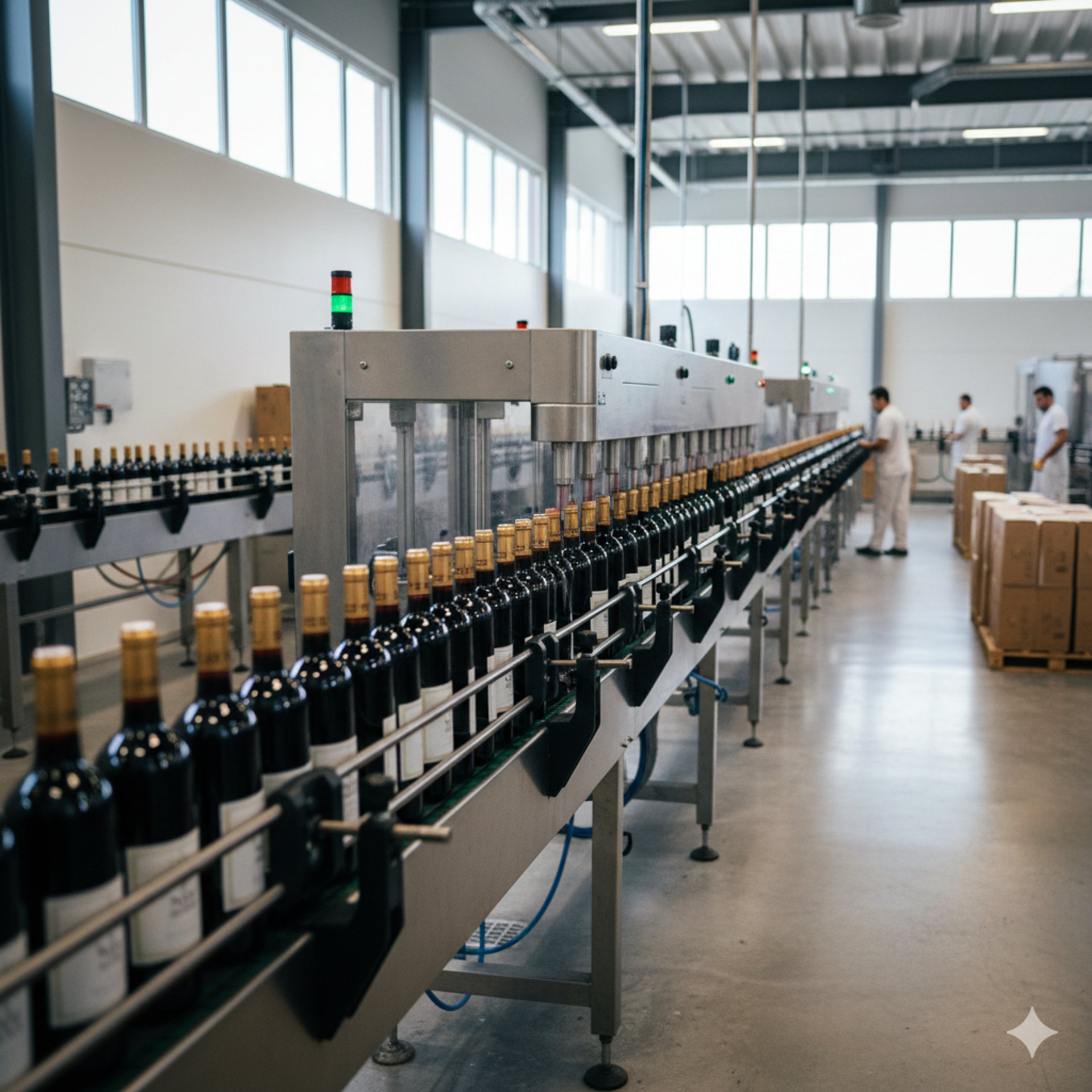
The bottling process must be performed meticulously to prevent oxygen from being introduced into the wine, which can cause premature aging and oxidation. Modern bottling lines are highly sophisticated, fast, and sterile.
Cork vs. Screw Cap (The Seal Debate)
The final choice is the closure, which seals the wine’s fate:
Cork: Traditional and proven for long-term aging (allowing minimal, slow oxygen exchange). However, corks can be susceptible to "cork taint" (TCA), which spoils the wine.
Screw Cap: Offers a perfect, reliable seal. It prevents cork taint and is great for wines meant to be consumed young (preserving freshness). Debate continues on their suitability for decades-long aging.
Conclusion: Your Wine is Ready
From the vine to the bottle, the journey is complete! The filtering and bottling process marks the official end of the winemaking process in the cellar. The bottle is now a stable time capsule, ready to rest until it reaches your glass. Cheers to the final product!