

Form and Function: How the Glass Shape Affects Wine Perception
SERVICE & TASTE
2/18/20263 min ler
The Glass as an Instrument
Many people believe that having different glasses for different wines is just a marketing trick or a matter of etiquette. However, from a physical and chemical standpoint, the glass is a functional instrument. It is designed to perform two main tasks: to collect and direct aromatic volatile compounds to your nose, and to control the delivery of the liquid to your palate.
The shape of the glass determines how much surface area of the wine is exposed to oxygen and, more importantly, how the "headspace" (the empty area inside the glass) captures the vapors. Choosing the right "tool" can be the difference between a wine that smells closed and muted, and one that expresses its full complexity.
The Engineering of the Bowl
The "Bowl" is the most critical part of the glass. Its design follows a specific logic based on the style of wine it is intended to hold:
Aeration and Surface Area: A wider bowl allows for more surface area, which helps the wine "breathe." This is essential for bold reds, where oxygen helps soften tannins and release deep aromas of fruit and spice.
The Tapered Rim: Most quality glasses curve inward at the top. This "tulip" shape acts as a funnel, concentrating the aromatic molecules at the rim so that when you take a sniff, your nose receives a high concentration of the wine's bouquet.
The Headspace: The volume of air above the liquid is where the magic happens. A large headspace allows complex layers of aromas to separate and become distinguishable.
The Science of Shapes: Bordeaux vs. Burgundy
The two most iconic red wine glasses are designed for very different chemical profiles:
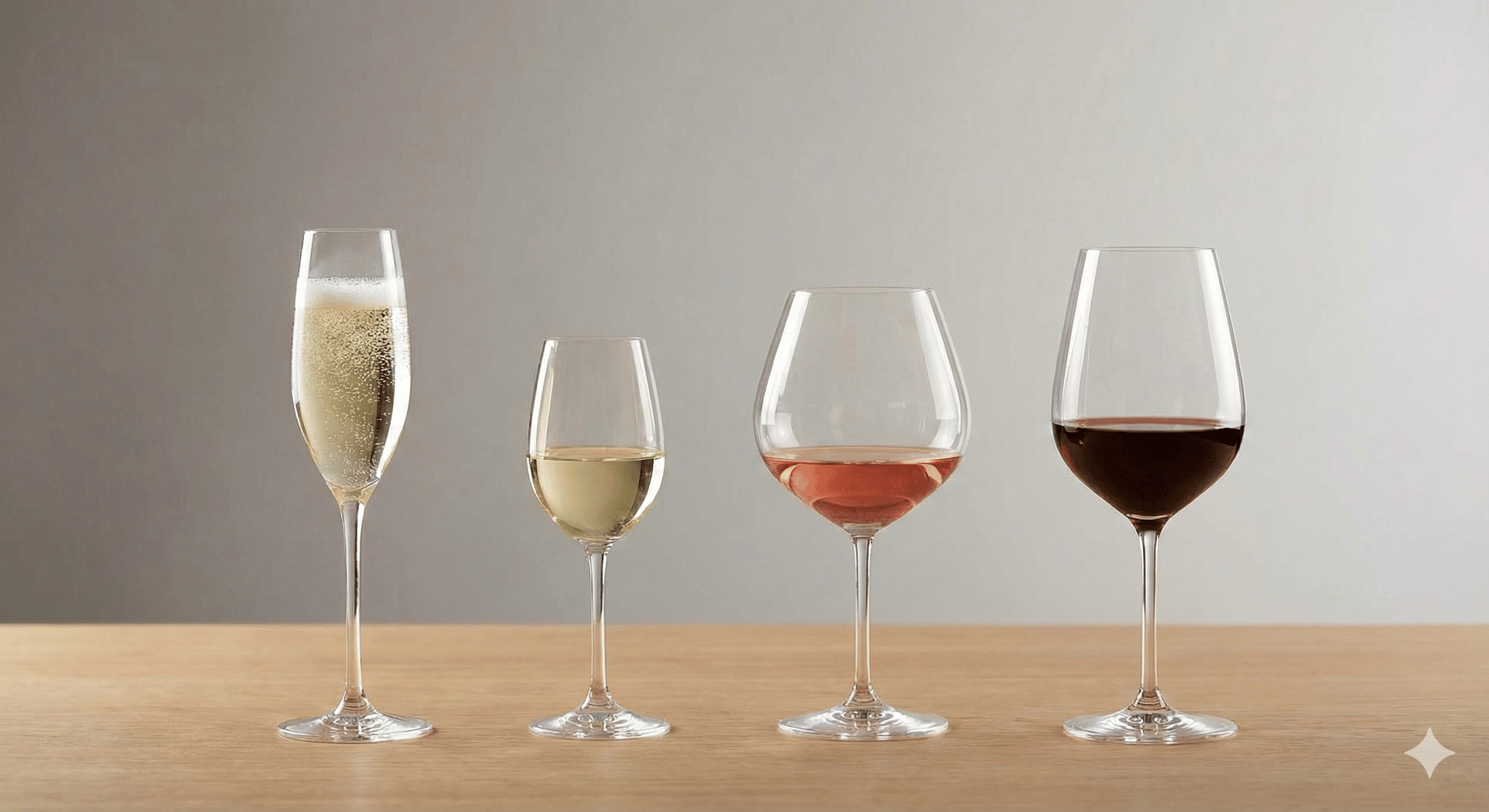
The Bordeaux Glass: This glass is tall with a broad bowl but a relatively wide opening. It is designed for powerful wines like Cabernet Sauvignon. The height creates distance between the wine and the nose, allowing ethanol vapors to dissipate while focusing the fruit. The shape directs the wine to the back of the mouth, which helps balance the intensity of high tannins.
The Burgundy Glass: This glass is shorter with a much wider, more rounded "balloon" bowl and a narrower rim. It is designed for delicate, highly aromatic wines like Pinot Noir. The large bowl captures the extremely subtle floral and red-fruit scents, while the narrow rim focuses them directly into the senses.
[Image comparing Bordeaux, Burgundy, and White Wine glass shapes]
White Wine and the Temperature Factor
White wine glasses are typically smaller and have a more "U-shaped" or narrow bowl. This design serves two technical purposes:
Thermal Preservation: A smaller volume of wine means it is finished before it has time to warm up. The smaller surface area also reduces the rate of heat exchange with the ambient air.
Aroma Concentration: White wines often have delicate, high-toned floral or citrus notes. A narrower opening focuses these closer to the nose, ensuring they don't get "lost" in a large bowl.
The Evolution of Sparklings: Goodbye, Flute
In 2026, the traditional "Flute" (the tall, narrow glass) is being replaced by the Sparkling Tulip or even a standard white wine glass. While the flute is excellent for watching bubbles rise, it is terrible for smelling the wine. Modern sparkling winemaking (especially for Champagne and high-quality Cava) produces complex, yeasty aromas that need a bit more room to breathe. A slightly wider middle with a tapered top preserves the bubbles while finally allowing you to actually smell the wine.
The Material: Crystal vs. Glass
From a microscopic perspective, there is a big difference between standard glass and lead-free crystal:
Micro-Texture: Under a microscope, crystal is rougher than glass. This creates more "friction" for the wine as it is swirled, which helps break up the surface tension and release more aromatic compounds.
Thinness: Crystal is stronger than glass, allowing it to be spun incredibly thin. A thin rim is not just about luxury; it allows the wine to flow smoothly onto the tongue with minimal disruption, providing a more precise tasting experience.
The "Universal" Solution
While a dedicated glass for every grape is the ideal scenario for a collector, you don't need a hundred glasses to enjoy wine. If you want one high-performance tool, look for a "Universal Glass." This is a medium-sized glass with a tapered tulip shape that is engineered to perform well with whites, rosés, and most reds. It is the "Swiss Army Knife" of the wine world—proving that in the end, good engineering is about finding the perfect balance between form and function.