France: The Ultimate Benchmark of Fine Wine
Understanding Terroir: How Location Defines Flavor in the AOC System
12/11/20253 min read
Bienvenue to France! When we talk about wine, all roads eventually lead here. France is widely considered the motherland of modern wine. Why? Because the most popular grapes in the world—Cabernet Sauvignon, Merlot, Chardonnay, Pinot Noir, Sauvignon Blanc—are all French celebrities.
For a beginner, French wine can feel intimidating. The labels are confusing, the prices can be high, and there are so many rules. But don't worry. Once you understand the basics, you will discover that France offers the most diverse, elegant, and food-friendly wines on the planet.
A Sip of History: Monks and Emperors
The Romans planted vineyards across France, but it was the Catholic Monks in the Middle Ages (especially in Burgundy) who truly turned winemaking into a science. They mapped out every inch of soil, realizing that grapes grown here tasted different than grapes grown there (just a few feet away).
Later, in 1855, Emperor Napoleon III requested a classification of the best wines of Bordeaux for the Universal Exposition in Paris. This created the famous 1855 Classification, a ranking of "Grand Cru" estates that is still used today and dictates the price of luxury wines.
Decoding the Label: Terroir and the AOC System
The most important thing to learn about French wine is that they label by Region, not by Grape. This is because of a concept called Terroir (teh-wahr).
What is Terroir?
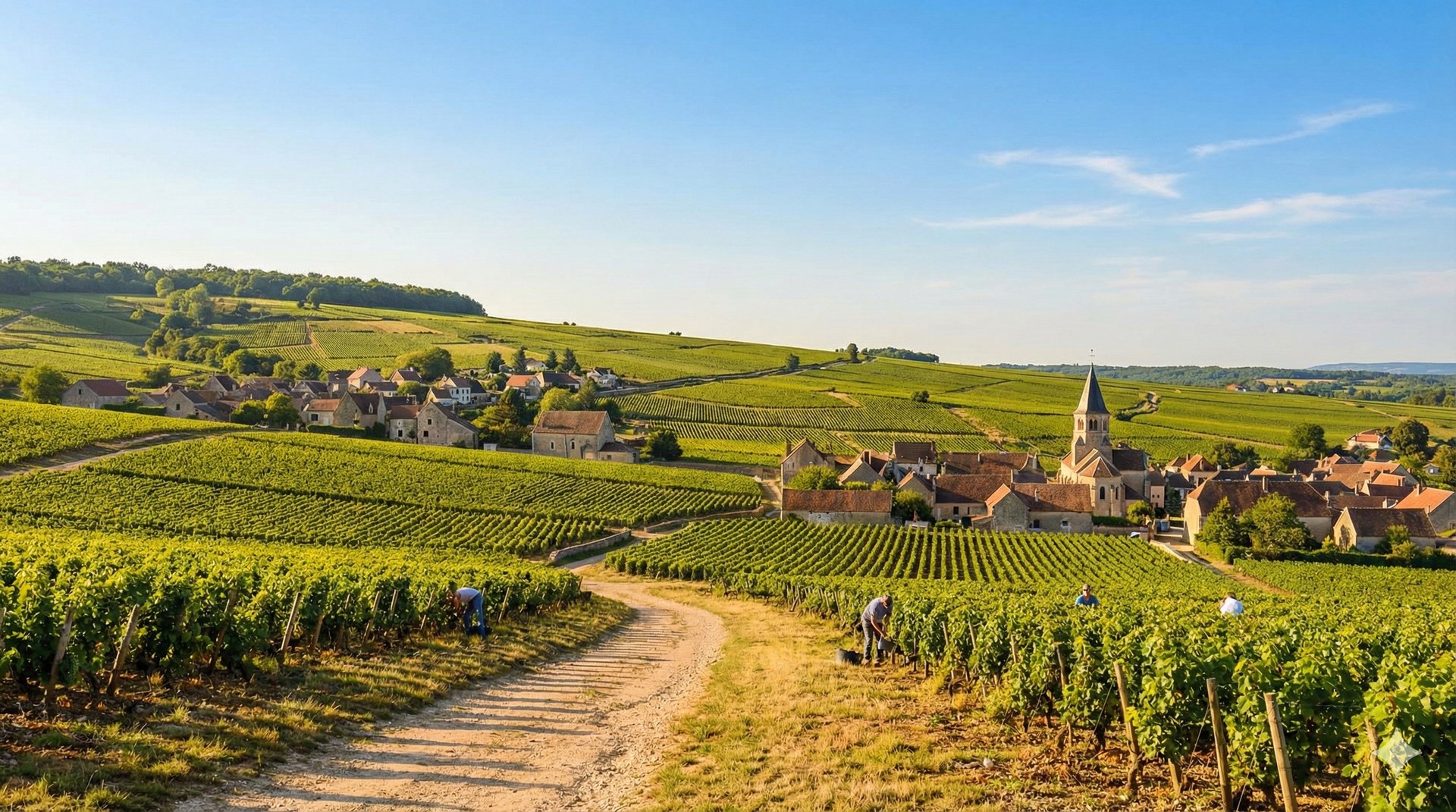
It is the belief that the soil, climate, and human touch of a specific place give the wine its character. A Pinot Noir from Burgundy tastes different than a Pinot Noir from California because the Terroir is different.
The AOC System
France created the Appellation d'Origine Contrôlée (AOC) system to protect these places.
AOC on the label: Guarantees that the wine comes from a specific place and follows strict rules (which grapes can be grown, alcohol levels, etc.).
The Rule of Thumb: If you buy a bottle labeled "Sancerre," the law says it must be Sauvignon Blanc. If you buy "Chablis," it must be Chardonnay. Learning these regional codes is the key to mastering French wine.
Major Wine Regions: The Big Five
France has many regions, but these five are the pillars of the wine world:
1. Bordeaux
The most famous wine region on earth. Located in the southwest near the Atlantic.
The Grapes: Cabernet Sauvignon and Merlot (always blended).
The Style: Powerful, structured, age-worthy red wines.
Key Area: Divided into the "Left Bank" (Cabernet dominant) and "Right Bank" (Merlot dominant).
2. Burgundy (Bourgogne)
The spiritual home of "Terroir" in eastern France. It is a maze of tiny vineyards owned by many different families.
The Grapes: Pinot Noir (Red) and Chardonnay (White).
The Style: Elegant, earthy, and complex. The focus here is on the specific vineyard plot, not the brand name.
3. Champagne
The northernmost region, famous for the world's most celebratory drink.
The Style: Sparkling wine made via the "Traditional Method" (secondary fermentation in the bottle).
Note: Only sparkling wine from this region can legally be called Champagne.
4. The Rhône Valley
Located in the southeast along the Rhône River.
The Grapes: Syrah (in the North) and Grenache blends (in the South).
The Style: Spicy, peppery, and bold red wines. Famous for "Châteauneuf-du-Pape."
5. The Loire Valley
The "Garden of France" along the Loire River.
The Grapes: Sauvignon Blanc (Sancerre) and Chenin Blanc.
The Style: Crisp, high-acidity whites that are incredible with goat cheese and seafood.
Production Statistics
France is a titan of industry. According to the OIV (International Organisation of Vine and Wine) recent data:
Global Rank: France consistently battles Italy for the #1 spot in global production volume. In 2023, France reclaimed the top spot.
Volume: Producing roughly 48 million hectoliters annually.
Value: France is undisputed #1 in value. They sell their wine for higher average prices than any other major country thanks to the prestige of Champagne and Bordeaux.
Renowned Producers and Wineries
French wine ranges from small farmers to luxury empires. Here are the names that command respect:
Château Lafite Rothschild (Bordeaux): One of the five "First Growths." A symbol of wealth and prestige.
Domaine de la Romanée-Conti (Burgundy): Often called "DRC." They make the most sought-after and expensive Pinot Noir in the world.
Moët & Chandon (Champagne): The largest Champagne house, producing the reliable Imperial Brut and the legendary Dom Pérignon.
E. Guigal (Rhône): A master of the Rhône Valley, producing everything from affordable Côtes du Rhône to single-vineyard masterpieces.
Château d'Yquem (Sauternes): The world's most famous sweet wine. It is made from grapes affected by "Noble Rot" (Botrytis), resulting in liquid gold.
Iconic Wines: The Holy Grails
These are the bottles that collectors dream about:
1. Romanée-Conti Grand Cru
A bottle of this Pinot Noir can cost as much as a new car. It is praised for its ethereal texture and perfect balance.
2. Château Margaux (1787)
While you can buy current vintages, the history of Margaux is legendary (Thomas Jefferson was a fan). It is the epitome of elegance in Bordeaux.
3. Petrus
A Merlot-based wine from the Pomerol region of Bordeaux. It is incredibly rare, rich, and plush.
Conclusion: The Journey Begins
France is a lifetime study. You don't have to start with the expensive stuff. A simple Côtes du Rhône or a crisp white from the Loire Valley can show you exactly why this country is the benchmark. The French believe wine is food, meant to be shared at the table. Bon appétit!