


FROM BERRY TO MUST
The Winery Action Begins
12/3/20253 min ler
You’ve harvested your perfect grapes; now it’s time to get that precious juice out! The moment the grapes arrive at the winery, they enter a crucial two-part process: crushing and pressing.
If the harvest was the when, crushing and pressing are the how we start turning those berries into wine. These steps create what winemakers call the "must"—the fresh grape juice that contains the skins, seeds, and pulp.
Step 1: Crushing (Breaking the Berry)
Crushing is exactly what it sounds like: breaking the skin of the grape berries.
A Note on Destemming
Before the actual crushing happens, most modern wineries use a crusher-destemmer machine. This machine first separates the grape berries from the rachis (the woody stem structure).
Why remove the stems?
Harsh Tannins: Stems contain green, bitter tannins that can make the final wine taste astringent or unbalanced.
Flavor Control: Removing them gives the winemaker more control over the flavor and texture of the wine.
The berries then drop into the crusher, which typically uses rollers to gently break the skin, allowing the pulp and juice to leak out. This must then falls into a fermentation tank.
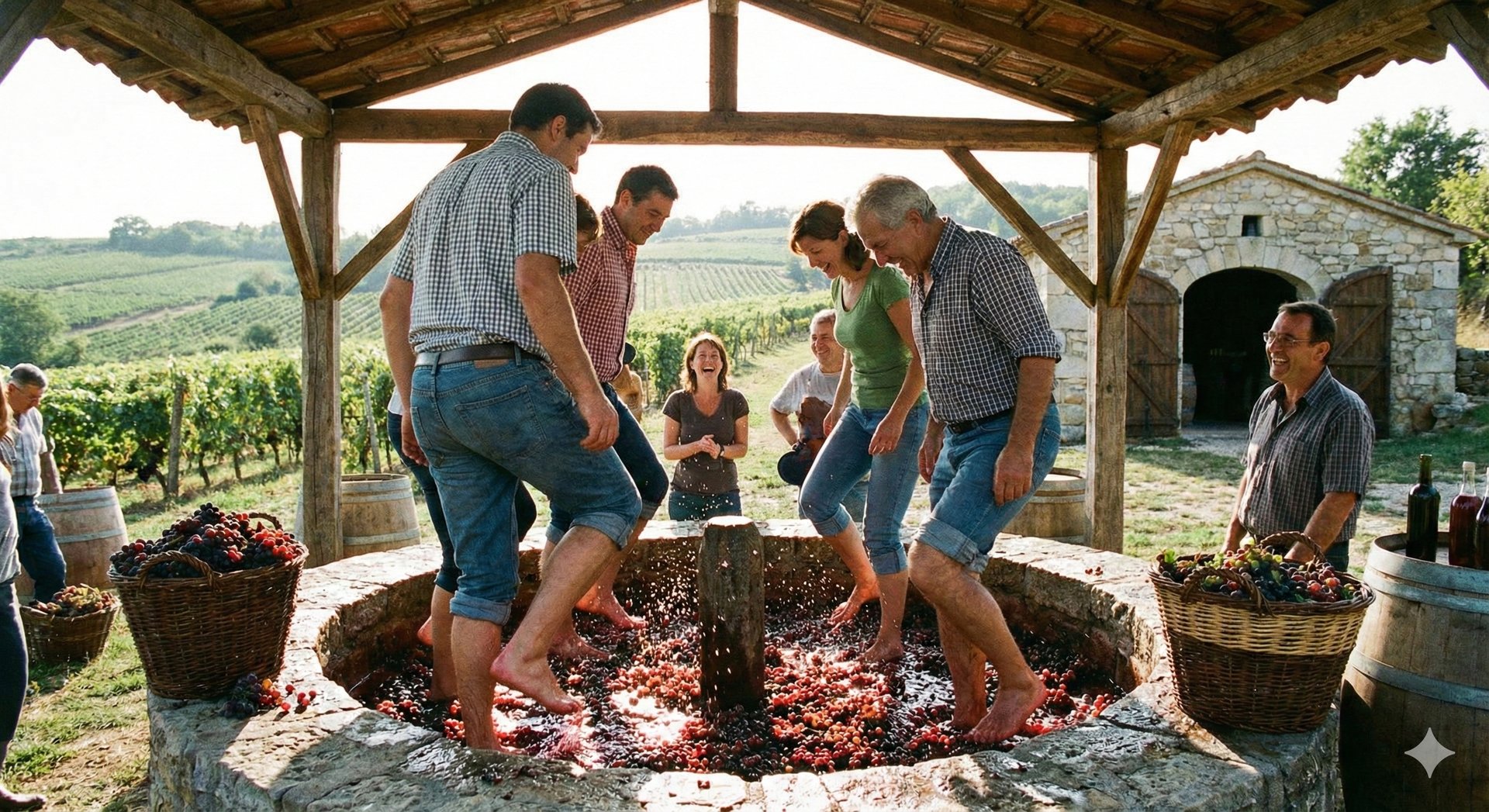
Fun Fact: The old-school, romantic image of people stomping grapes with their feet (pigeage in French) was an ancient form of gentle crushing! A human foot breaks the skin without shattering the seeds, which can release bitter flavors.
The Fork in the Road: Timing the Pressing (Red vs. White)
The biggest difference between making red and white wine happens right here. It all comes down to when we perform the pressing step.
1. White Wines: Pressing BEFORE Fermentation
For white wines, the goal is purity, freshness, and a clear pale color.
The Process: Crushing >>> Pressing >>> Fermentation.
What happens: Immediately after crushing, the grapes go straight to the press. We separate the juice from the skins before the juice starts to ferment.
Why: This prevents color and tannins from leaching into the juice. Only the clear, squeezed juice goes into the tank to become wine.
2. Red Wines: Pressing AFTER Fermentation
For red wines, color and structure are everything.
The Process: Crushing >>> Fermentation >>> Pressing.
What happens: After crushing, the grapes go directly into the fermentation tank with their skins. They ferment together. Only after the wine is made do we press the wet skins.
Why: The alcohol generated during fermentation acts as a solvent, pulling the deep red color and tannins out of the skins. If we pressed earlier, we would just make rosé or white wine from red grapes!
Step 2: Pressing (Squeezing the Last Drop)
Pressing is the mechanical process of applying pressure to the grape solids to extract the liquid, whether that liquid is fresh juice (for whites) or fermented wine (for reds).
The Goal of Pressing
The liquid that flows out naturally without any pressure is called the "free-run" juice/wine. This is generally considered the highest quality because it is the most delicate and pure.
Pressing is done to get the press fractions—the liquid left trapped in the pulp and skins. Winemakers are very careful to apply pressure gently and gradually.
Why gentle pressing?
Quality Control: High pressure can crush the bitter seeds.
Style: The winemaker decides how much press wine (which has more structure and grip) to blend back into the free-run wine to achieve the perfect balance.
Different Types of Wine Presses (Technology in the Cellar)
Modern wineries use sophisticated presses that prioritize gentleness and control:
Basket Press: The oldest type! A cylinder of wood slats where pressure is applied from the top via a large plate. It’s slow and gentle, often favored by small, artisanal producers.
Pneumatic (Bladder) Press: The modern standard. It uses a large, internal rubber bladder that inflates with air, pushing the grapes against the side of a horizontal tank. This allows for very precise pressure control.
Conclusion: Ready for the Next Phase
Now you know the secret! If you are drinking white wine, it was pressed as juice. If you are drinking red wine, it was pressed as wine.
Either way, once the liquid is separated from the solids, the journey continues. Next time, we’ll dive deeper into the bubbling excitement of fermentation!