
How AI and Drones are Changing Your Glass
2/2/20262 min ler
For centuries, the most important tool a winemaker had was their own eyes and boots on the ground. They would walk the rows, taste the grapes, and guess the perfect moment to harvest. While that intuition still matters, the modern vineyard is beginning to look more like a high-tech lab. Today, some of the most prestigious estates in the world are using Artificial Intelligence (AI) and drones to ensure that every single grape reaches its full potential.
This technological shift isn't about replacing the human element; it’s about giving winemakers "superpowers." In an era of unpredictable weather and climate change, having real-time data is becoming the difference between a legendary vintage and a lost crop.
Eyes in the Sky: The Power of Drones
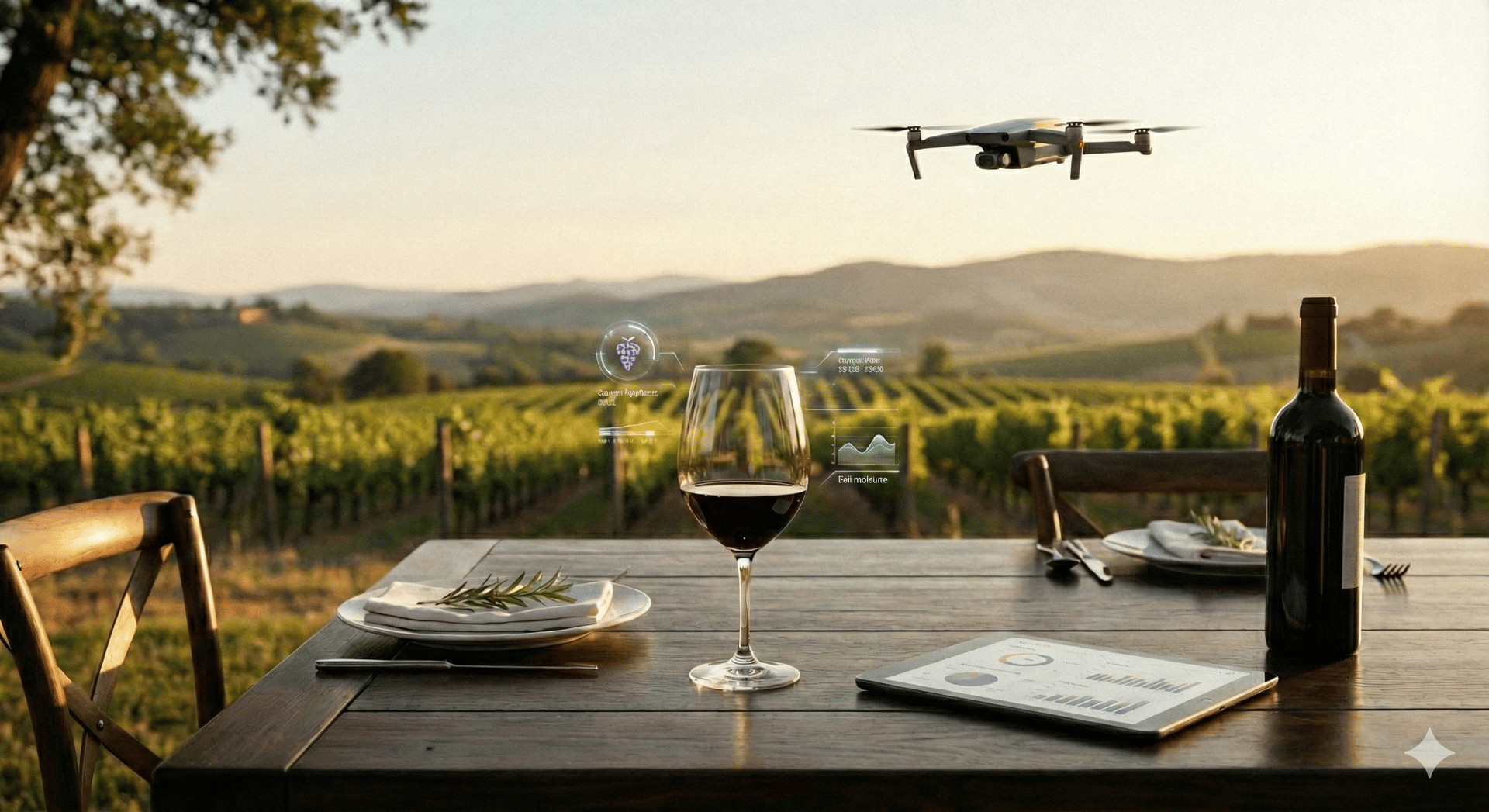
Drones have become the vineyard’s best friends. Equipped with multispectral cameras, these flying robots can "see" things the human eye cannot. They fly over thousands of vines and detect "water stress"—identifying exactly which plants are thirsty and which are not.
Instead of watering an entire field and wasting precious resources, winemakers can now use "precision irrigation." By looking at thermal maps generated by drones, they can give water only to the specific vines that need it. Furthermore, these cameras can detect the early signs of disease or pests before they are visible to the naked eye, allowing for targeted treatments that reduce the need for widespread pesticides.
Artificial Intelligence: The Digital Cellar Master
If drones are the eyes, AI is the brain. Vineyards are now being fitted with sophisticated sensors that monitor soil moisture, humidity, and temperature 24/7. This massive amount of data is fed into AI algorithms that can predict exactly when the grapes will reach their peak sugar and acidity levels.
This is a game-changer for the harvest. Instead of harvesting an entire 50-acre plot at once, AI can tell a winemaker that "Section A" is ready today, but "Section B" needs three more days of sunshine. This level of precision ensures that every bottle produced has the perfect balance of flavors, regardless of how challenging the growing season was.
Robots in the Rows
In regions like Bordeaux and Napa Valley, you might now see autonomous robots wandering the vineyard rows. These robots, like the "Ted" or "Bakus" models, are designed to handle the back-breaking work of weeding and pruning. Because they are electric and autonomous, they reduce the carbon footprint of the winery and can work through the night. By removing weeds mechanically, they eliminate the need for chemical herbicides, making the vineyard healthier and more sustainable for the long term.
The Future is Sustainable
Perhaps the most important benefit of this technology is sustainability. By using drones and AI to be more precise, wineries are drastically reducing their use of water, chemicals, and fuel. Technology is helping the wine world return to a more natural balance, using data to work with nature rather than trying to control it.
Conclusion: A Perfect Blend of Tradition and Science
The next time you enjoy a glass of your favorite wine, take a moment to consider the invisible technology that might have helped create it. From the drone that flew over the vines to the AI that calculated the harvest date, these innovations are ensuring that the world’s oldest drink has a very bright future. It’s a perfect blend of ancient tradition and cutting-edge science, proving that even a drink rooted in the earth can reach for the stars.