Portugal: The Master of Blends and Native Grapes
A Guide to Unique Blends, Native Grapes, and Incredible Value
12/11/20254 min read
Welcome to Portugal! For a long time, this small nation on the edge of Europe was famous for just one thing: Port wine. But let me tell you, times have changed. Today, Portugal is arguably the most exciting wine country in the world for adventurous drinkers.
With hundreds of unique grape varieties that don't grow anywhere else, Portugal offers flavors you have never tasted before. From the fresh, fizzy whites of the north to the bold, sun-baked reds of the south, let’s explore why this country is capturing the hearts of wine lovers everywhere.
A Sip of History: Tradition Meets Modernity
Portugal has a winemaking history that goes back thousands of years, influenced deeply by the Romans. However, two major factors shaped what we drink today:
1. The British Connection
In the 1700s, treaties between Portugal and England led to the boom of the Port wine trade in the Douro Valley. This created a long tradition of fortified wines that put Portugal on the map.
2. The Modern Revolution
When Portugal joined the European Union in 1986, funds poured in to modernize wineries. Producers started focusing less on bulk wine and more on premium, high-quality table wines. This sparked the "Portuguese Wine Revolution" we are enjoying right now.
Major Wine Regions: A Tour of the Land
Despite its small size, Portugal has incredibly diverse climates. Here are the regions you need to know:
The Douro Valley
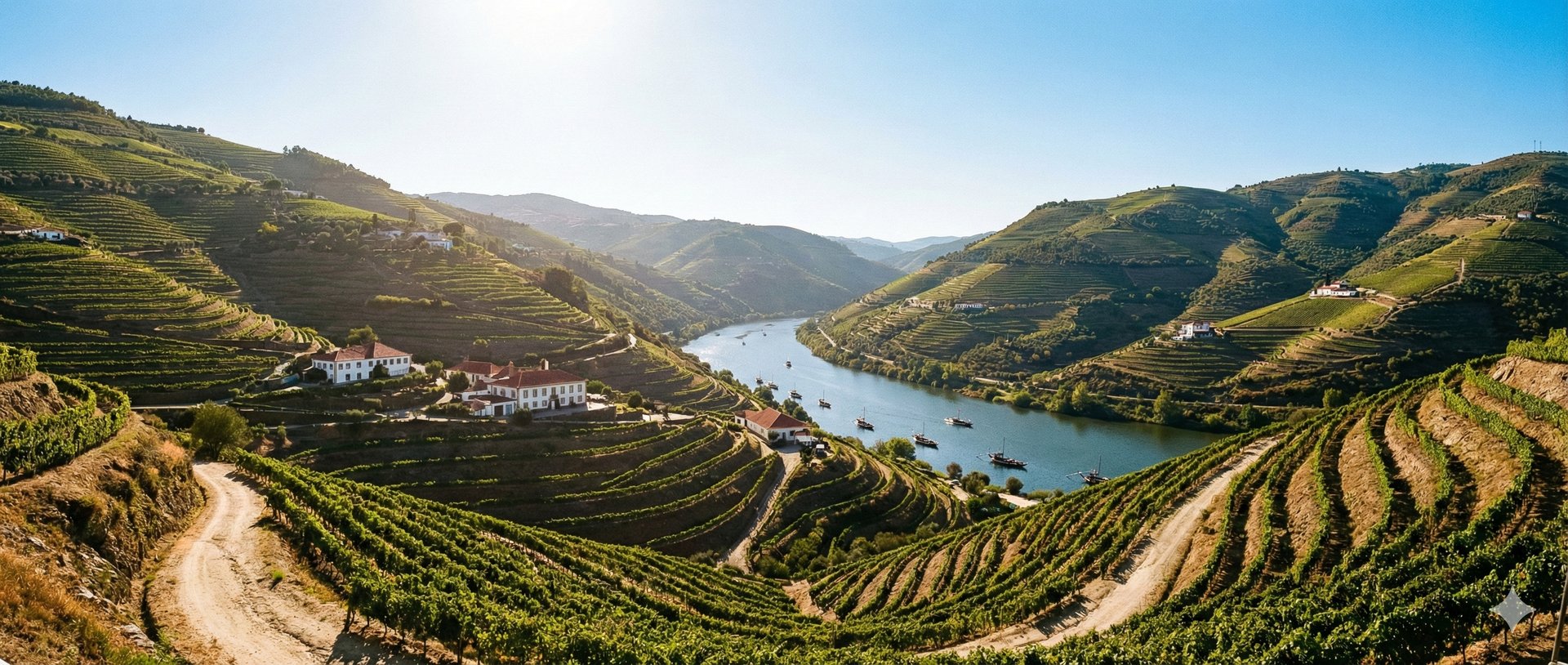
This is the most famous region, a UNESCO World Heritage site. It is known for its steep terraced vineyards along the Douro River.
Best for: Port Wine (fortified) and powerful, mineral-driven red table wines.
Alentejo
Covering the southern third of the country, this hot, dry region is often compared to California or Australia. It is famous for its cork trees and vast plains.
Best for: Rich, smooth, and fruity red wines that are easy to love.
Vinho Verde
Located in the cool, rainy northwest. The name means "Green Wine," referring to the wine being young, not the color.
Best for: Light, low-alcohol, high-acidity white wines with a slight fizz.
Dão
Located in the interior, surrounded by mountains. This region is often called the "Burgundy of Portugal" because of its focus on elegance and balance.
Best for: Sophisticated reds with good acidity and age-worthy whites.
Madeira
An island region in the Atlantic Ocean famous for its unique fortified wine that is heated during production.
Best for: Madeira wine, which is virtually indestructible and can last for centuries.
The Grapes: A Treasure Trove of Native Varieties
Portugal has over 250 native grape varieties! While the rest of the world plants Cabernet and Chardonnay, Portugal sticks to its roots.
Top Red Grapes
Touriga Nacional: The king of Portuguese grapes. It produces dark, concentrated wines with flavors of violet, bergamot, and dark berries.
Touriga Franca: Often blended with Nacional, it adds floral aromatics and elegance.
Tinta Roriz: Known as Tempranillo in Spain, it adds body and spice.
Baga: The star of the Bairrada region, known for high acidity and tannins, similar to Nebbiolo.
Top White Grapes
Alvarinho: The queen of white grapes, found in Vinho Verde. It makes full-bodied, aromatic wines with notes of peach and citrus.
Arinto: Known for its high acidity and lemon-lime flavors, adding freshness to blends.
Encruzado: The main white grape of the Dão, known for its ability to age and its rich texture.
The Art of the Blend
One thing that makes Portugal unique is the concept of the Blend. unlike the US, where you often buy a bottle labeled "Merlot," Portuguese wines are typically a mix of 3, 4, or even 20 different grape varieties.
This is often called a "Field Blend," where different grapes are planted together in the same vineyard, harvested together, and fermented together. This creates wines of incredible complexity and balance that are hard to replicate.
Production Statistics
Portugal is a heavyweight in the wine world. According to recent data from the OIV (International Organisation of Vine and Wine):
Global Rank: Portugal consistently ranks around the 10th largest wine producer in the world.
Volume: The country produces approximately 7.5 million hectoliters of wine annually.
Consumption: The Portuguese people really love their product! They consistently rank #1 in the world for wine consumption per capita.
Renowned Producers and Wineries
If you are looking for names to trust on the label, here are some industry leaders ranging from historic to modern:
Symington Family Estates: The giant of the Douro, owning famous Port houses like Graham’s and Dow’s, as well as excellent table wines.
Sogrape: The largest wine company in Portugal, famous for creating Mateus Rosé and owning the prestigious Casa Ferreirinha.
Herdade do Esporão: A leader in the Alentejo region, known for consistent quality and organic farming practices.
Niepoort: Led by Dirk Niepoort, this family business bridges the gap between traditional Ports and trendy, modern table wines.
Iconic Wines: The Bucket List
Want to taste the very best? These are legendary bottles that define Portuguese enology:
1. Barca Velha (Casa Ferreirinha)
The first great red wine of the Douro. It is only produced in exceptional years. It is rare, expensive, and considered the pinnacle of Portuguese table wine.
2. Pêra Manca (Cartuxa)
The icon of the Alentejo region. A powerful white and a rich red, this wine has a cult following and is steeped in history.
3. Vintage Port (Various Houses)
A classic Vintage Port from a top house like Taylor’s or Fonseca is iconic. These are wines made only in the best years and can age for 50 years or more.
Conclusion: Time to Explore
Portugal offers a wine adventure like no other. Whether you are sipping a refreshing Vinho Verde on a patio or enjoying a glass of Vintage Port by the fire, there is a Portuguese wine for every moment. Next time you are at the wine shop, skip the usual suspects and grab a bottle from Portugal. Saúde!