

The Legacy of Adega Cartuxa
The Sacred Sipping of Alentejo
WINES
4/2/20263 min ler
If you were to stand in the middle of a vineyard in Alentejo, Portugal, you’d feel two things immediately: the intense, golden warmth of the sun and a profound sense of silence. In the city of Évora, a UNESCO World Heritage site, that silence has a name: Cartuxa.
Named after the Carthusian monks who established the Santa Maria Scala Coeli Monastery in the 16th century, Adega Cartuxa is more than a producer of world-class wine. It is the beating heart of the Fundação Eugénio de Almeida, a foundation that uses its wine and olive oil profits to fund social, cultural, and educational projects across the region. At Cartuxa, the "spirit" of the wine isn't just a metaphor—it’s built into the very stones of the cellar.
The Alchemy of Granitic Soil and Alentejo Sun
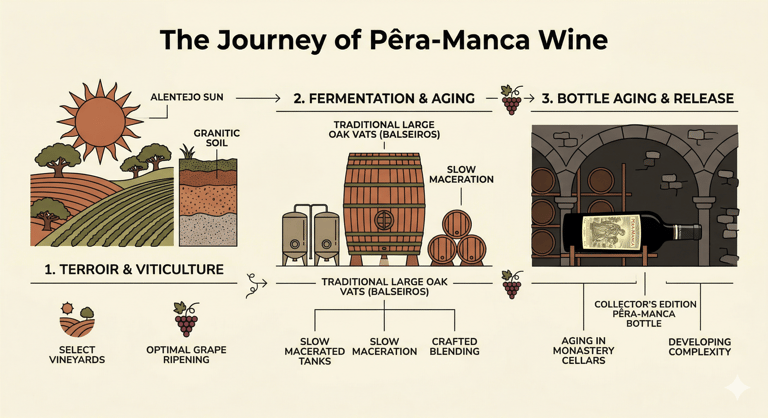
To understand why a bottle of Cartuxa tastes the way it does, we have to look at the ground. Most of their vineyards sit on granitic soils. Think of granite as a natural air conditioner for the vine's roots. While the Alentejo sun is famously "generous" (it gets very hot), the granite helps retain just enough moisture and provides a mineral tension that keeps the wines from feeling heavy or "jammy."
In these soils, indigenous Portuguese grapes thrive. You won’t find much Cabernet or Merlot here. Instead, you’ll find:
Antão Vaz: The star white grape of the region, providing structure and tropical aromas.
Arinto: The "acid backbone" that keeps the whites refreshing.
Aragonez & Trincadeira: The red duo that creates that classic Alentejo profile—think dark plums, dried herbs, and velvet-smooth tannins.
The Pêra-Manca Legend: A Wine with a History Lesson
You cannot mention Adega Cartuxa without whispering the name Pêra-Manca. This is the "Unicorn" of Portuguese wine. Legend has it that Pêra-Manca was the wine on board Pedro Álvares Cabral’s ship when he discovered Brazil in 1500.
What makes it so special today? It is only produced in exceptional years. If the harvest isn't perfect, there is no Pêra-Manca. The red is a blend of Aragonez and Trincadeira, aged for 18 months in massive oak vats and then—get this—another four years in the bottle before it even hits the shelf. It’s a lesson in patience. It doesn’t scream for attention; it waits for you to be ready for it.
Modern Innovation in an Ancient Cellar
While the history is ancient, the winemaking is anything but stuck in the past. Adega Cartuxa operates two main centers:
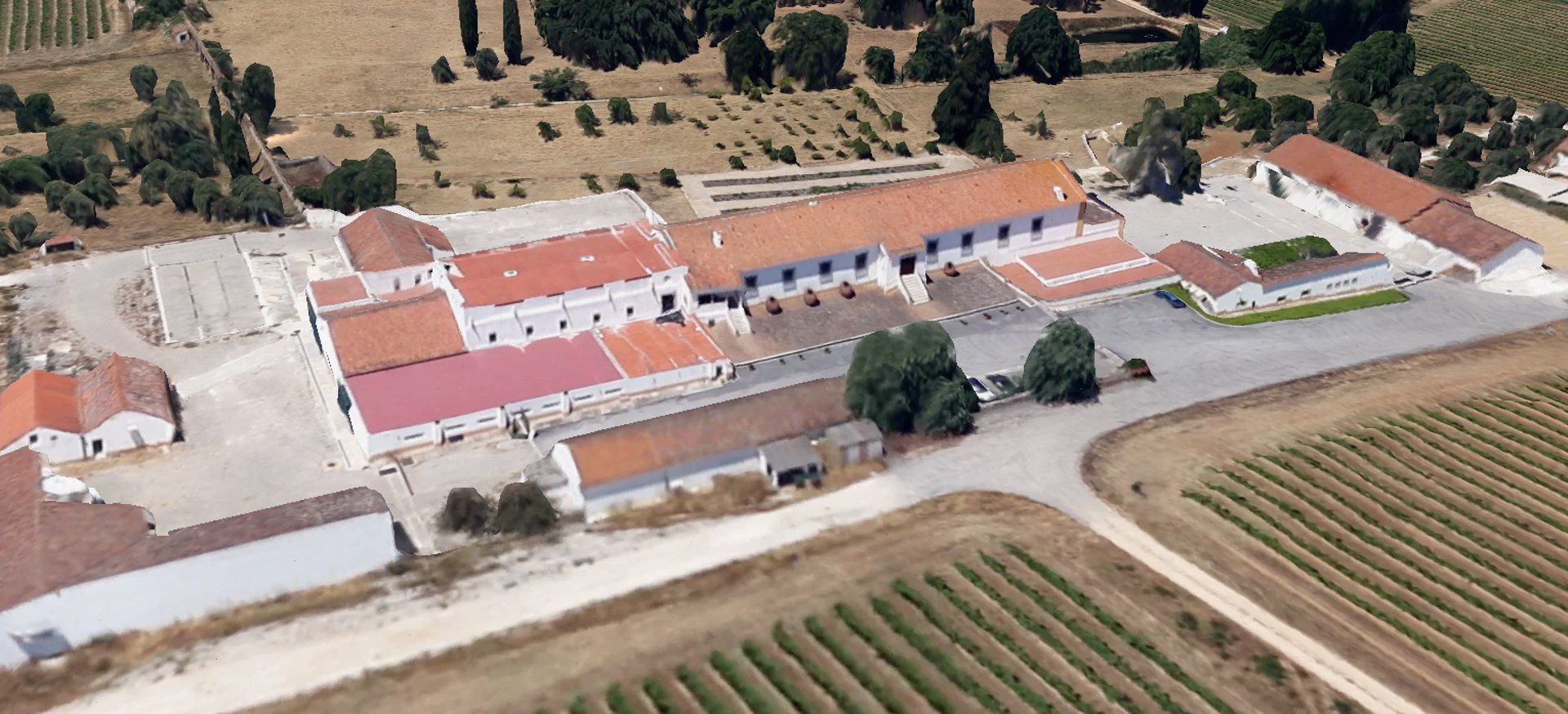
Quinta de Valbom: The historic heart where the premium wines age in the cool shadows of the monastery.
Monte de Pinheiros: A state-of-the-art facility where modern technology ensures that even their everyday "EA" labels maintain impeccable quality.
The winery has embraced precision viticulture, using sensors and data to give each vine exactly what it needs. This isn't just about being high-tech; it’s about sustainability. By understanding the vineyard’s needs at a granular level, they reduce water waste and chemical use, ensuring the land stays healthy for the next 500 years.
Why Every Sip Matters
When you buy a bottle of Cartuxa, you aren't just paying for fermented grape juice. You are funding a hospital, a local art gallery, or a scholarship for a student in Évora. This "Circular Viticulture" is what sets the winery apart. In a world of corporate conglomerates, Cartuxa remains a local institution dedicated to its people.
Practical Tips for the Wine Traveler
If you find yourself in Évora, a visit to the Cartuxa Enoteca is mandatory. Here’s how to do it like a local:
Book Ahead: The cellar tours are popular, especially if you want to see the historic aging rooms at Quinta de Valbom.
Don't Skip the Olive Oil: Their olive oils are just as prestigious as their wines.
The "Secret" White: Everyone hunts for the Pêra-Manca Red, but the Pêra-Manca White (made from Antão Vaz and Arinto) is arguably one of the greatest white wines in the world. It ages beautifully, developing nutty, honeyed notes over time.
Adega Cartuxa is proof that wine is a bridge—between the past and the future, between the land and the community. It’s elegant, it’s soulful, and it’s a taste of the true Alentejo.