


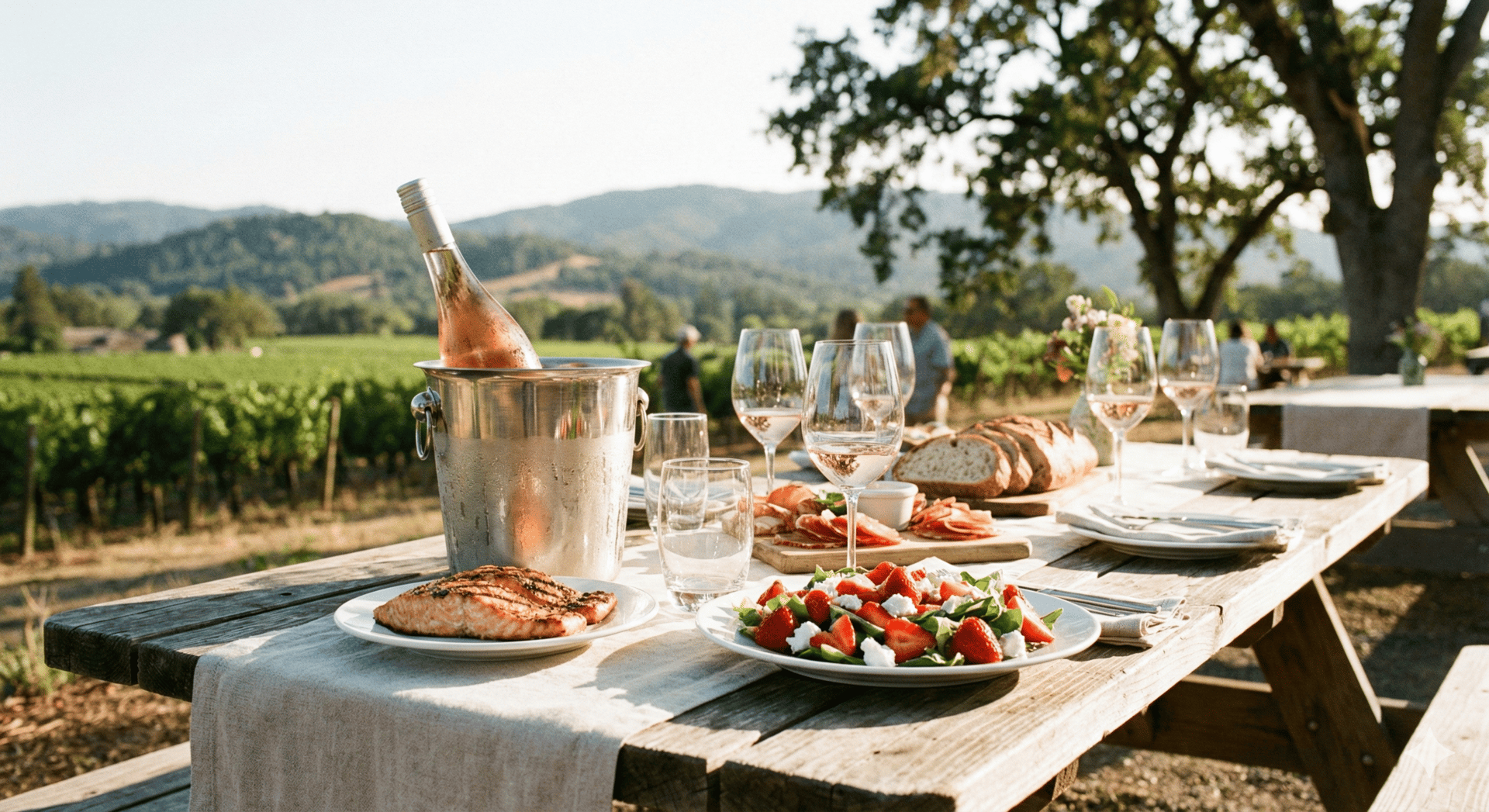
Rosé All Day
The Ultimate Food Partner
1/29/20262 min ler
For a long time, Rosé was unfairly tucked away as just a "poolside drink" or a summer refreshment. However, professional sommeliers have a secret: when a table orders a mix of fish, meat, and salads, the safest and most brilliant choice is often a bottle of Rosé.
The magic of Rosé lies in its position as a bridge between white and red wines. It offers the bright, palate-cleansing acidity of a white wine, but with the added soul, texture, and red-fruit flavors derived from brief contact with red grape skins. This unique profile allows Rosé to handle flavors that are too heavy for a delicate white and too light for a structured red.
Pale and Dry: The Mediterranean Master
The most famous style of Rosé, pioneered in Provence (France), is pale pink, bone-dry, and crisp. These wines, often made from Grenache, Cinsault, and Syrah, feature delicate notes of strawberry, citrus zest, and a hint of salinity.
These wines are the natural companions for Mediterranean flavors. Think of dishes with garlic, olive oil, and fresh herbs. A dry Rosé is spectacular with a classic Bouillabaisse (seafood stew), grilled vegetables, or a Niçoise salad. Because of their subtle salinity, they are also incredible with raw seafood, like tuna tartare or sashimi, providing a refreshing lift without masking the delicate flavor of the fish.
Fruit-Forward and Savory: The Versatile All-Rounder
Many Rosés from regions like Spain (Rosados), Italy (Rosato), or even certain New World versions, have a deeper color and a more intense fruit profile. These wines are often a bit "meatier" and can handle bolder flavors.
This style is the absolute best partner for spicy and highly seasoned foods. If you are having a barbecue with glazed ribs, spicy chicken wings, or even Lebanese cuisine with hummus and spiced lamb, a savory Rosé has enough fruit to balance the spice and enough acidity to cut through the fat. It is also the perfect "Pizza Wine," especially for toppings like pepperoni or sausage, where you need something more refreshing than a heavy red but more substantial than a light white.
The Charcuterie and Cheese Hero
When it comes to a shared board of cured meats and cheeses, Rosé is often the winner. Cured meats like Prosciutto, Salami, and Jamón Ibérico are salty and fatty. The acidity in a Rosé cuts through that fat, while its fruitiness complements the saltiness.
For cheese lovers, Rosé is surprisingly versatile. It pairs beautifully with soft, bloomy-rind cheeses like Brie, but also has enough character to stand up to semi-hard cheeses like Gruyère or even a young Manchego. If your cheese board includes dried fruits or nuts, the wine’s berry notes will create a delightful congruent pairing.
Why Complexity Matters: The "Hard to Pair" Ingredients
Rosé shines when faced with ingredients that typically clash with other wines.
Olives and Capers: Their briny, salty nature can make red wines taste metallic, but Rosé embraces them.
Anchovies and Sardines: These oily, strong-flavored fish are notoriously difficult to pair, but a crisp Rosé handles the oiliness with ease.
Tomato-based Salads: The high acidity of raw tomatoes can flatline a low-acid wine, but the vibrant profile of a Rosé stays balanced.
Conclusion: The Wine for Every Occasion
The next time you find yourself staring at a menu featuring a wide variety of flavors, remember the Rosé. Whether it is a light, elegant glass to start the meal or a bolder version to carry you through a spicy main course, Rosé offers a balance of freshness and flavor that few other wines can match. It is the ultimate proof that you don't have to choose between white and red to have a perfect culinary experience.