South Africa: Where Old World Heritage Meets New World Fruit
A Journey Through the Cape: Chenin Blanc, Pinotage, and 350 Years of History
12/11/20253 min read
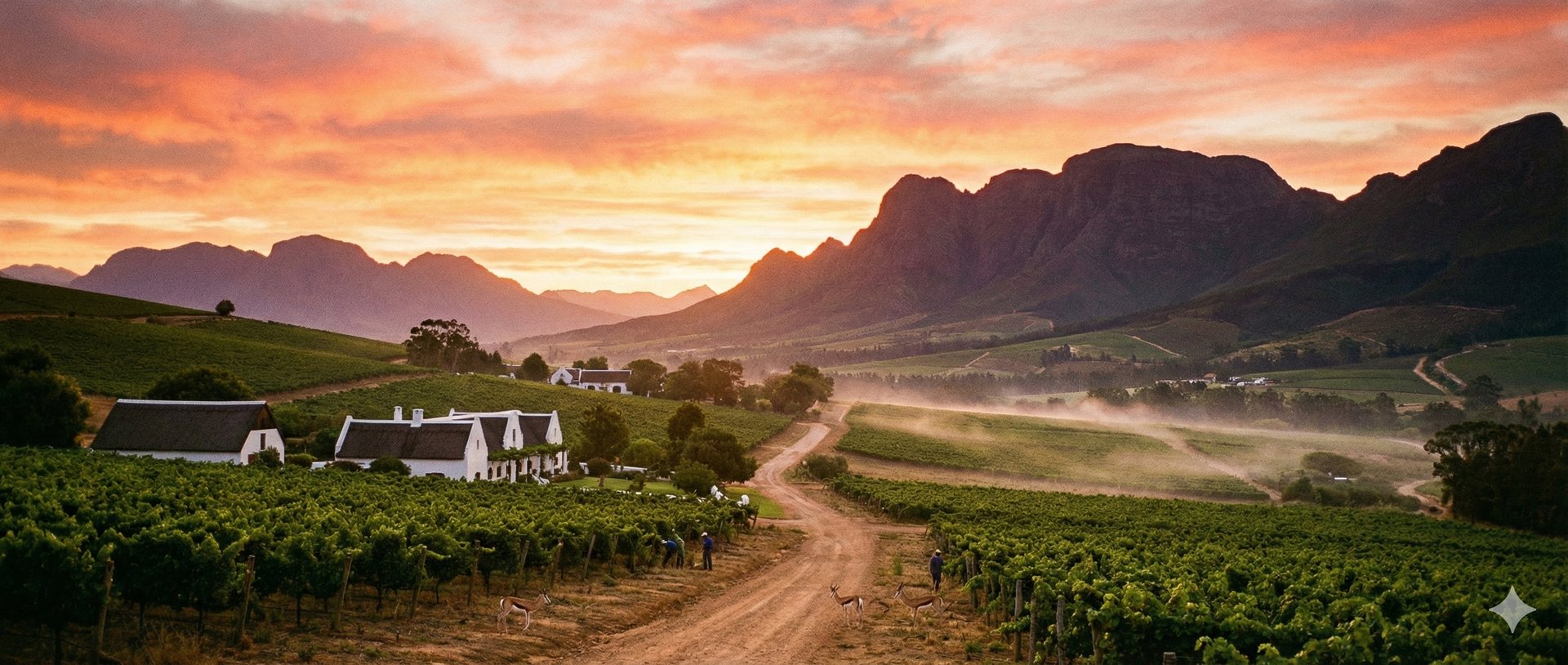
Welcome to the Cape of Good Hope! South Africa is arguably the most beautiful wine country on earth. Imagine vineyards stretching across ancient valleys, surrounded by dramatic mountains, all within sight of the ocean where the Atlantic and Indian currents meet.
South Africa is unique in the wine world. Geographically, it is "New World" (Southern Hemisphere). But stylistically and historically, it feels very "Old World." The wines here often bridge the gap: they have the ripe fruit of Australia or Chile, but the earthiness and structure of France. It is truly the best of both worlds.
A Sip of History: Napoleon’s Favorite Drink
South African wine isn't new. The first vintage was recorded in 1659 by Dutch settlers—that is centuries before Napa Valley even existed!
In the 18th and 19th centuries, the sweet wine from Cape Town, called "Vin de Constance," was the most famous wine in the world. Kings drank it. Writers like Charles Dickens wrote about it. Even Napoleon Bonaparte requested crates of it while he was exiled on St. Helena.
After a dark period of isolation during the Apartheid era, the industry was reborn in the 1990s. Today, a new generation of winemakers is focusing on old vines and ethical farming, creating a massive boom in quality.
The Grapes: A National Identity
South Africa has two grapes that define its soul: one adopted, and one created.
1. Chenin Blanc (The Adopted Star)
In France (Loire Valley), this grape makes high-acid, lean wines. In South Africa, where it was historically called "Steen," it is the superstar.
The Style: South African Chenin Blanc is incredibly versatile. It ranges from crisp and zesty to rich, oaked, and creamy (similar to Chardonnay) with flavors of baked apple, honey, and peach. It is arguably the best value white wine in the world right now.
2. Pinotage (The Native Son)
This is the only grape created in South Africa. In 1925, scientists crossed Pinot Noir (for elegance) with Cinsault (for heat tolerance).
The Style: Pinotage is controversial! Bad versions can smell like burnt rubber. But great modern versions are delicious, offering smoky, earthy flavors mixed with dark berries and sometimes notes of coffee or chocolate.
Major Wine Regions: The Western Cape
Almost all wine production happens in the Western Cape, benefiting from the cooling winds known as the "Cape Doctor."
1. Stellenbosch
The Napa Valley of South Africa. Located just east of Cape Town, this is the center of education and luxury.
Best for: Cabernet Sauvignon and Bordeaux-style blends. The wines here are serious, structured, and age-worthy.
2. Swartland
The hipster capital! Once a region for bulk wine, it is now the trendiest place in the country. Winemakers here focus on "Old Vines" and minimal intervention.
Best for: Syrah and Chenin Blanc made in a natural, rugged style.
3. Franschhoek
Literally "The French Corner." Founded by French Huguenots. It is the culinary capital of the Cape.
Best for: Méthode Cap Classique (Sparkling wine) and rich reds.
4. Constantia
The historic suburb of Cape Town. It is cool and windy.
Best for: Fresh Sauvignon Blanc and the legendary sweet wines.
Method Cap Classique (MCC)
You can't talk about South Africa without mentioning bubbles. MCC is the name for South African sparkling wine made using the exact same method as Champagne (fermented in the bottle). It is widely considered the best quality-for-price sparkling wine outside of France.
Production Statistics
South Africa is a consistent top player. According to the OIV:
Global Rank: Typically ranks #8 in world production.
Volume: Producing around 9 to 10 million hectoliters annually.
Sustainability: South Africa leads the world in ethical certifications, with seals like "Integrity & Sustainability" guaranteeing environmental and social responsibility.
Renowned Producers and Wineries
Kanonkop: The "First Growth" of South Africa. Famous for their "Paul Sauer" blend and for proving that Pinotage can be a world-class fine wine.
The Sadie Family: Eben Sadie is a rockstar winemaker in the Swartland. His wines are incredibly sought after and showcase the terroir perfectly.
Klein Constantia: The modern revival of the historic estate. They produce the legendary sweet wine "Vin de Constance."
Meerlust: A historic family estate in Stellenbosch, famous for their Bordeaux-blend called "Rubicon."
Hamilton Russell: Pioneers of the Walker Bay region, proving South Africa can make Pinot Noir and Chardonnay that rival Burgundy.
Iconic Wines: History in a Glass
1. Vin de Constance (Klein Constantia)
The recreation of the legendary sweet wine. Packaged in a unique asymmetrical bottle, it tastes of dried apricots, honey, and history.
2. Columella (The Sadie Family)
A Syrah-based blend from the Swartland. It changed the perception of South African wine, showing that they could be elegant and natural rather than just heavy.
3. Paul Sauer (Kanonkop)
A Cabernet-based blend. It was the first South African wine to receive a perfect 100-point score from a major international critic, cementing Stellenbosch's reputation.
Conclusion: A World in One Country
South Africa offers an adventure in every glass. It has the history of Europe, the sunshine of Australia, and a wild, natural beauty that is all its own. Whether you are sipping a creamy Chenin Blanc by the beach or a smoky Pinotage at a braai (BBQ), South African wine is vibrant, soulful, and unforgettable. Cheers!