

The 0.0% Revolution: The Rise of Alcohol-Free Fine Wine
2/1/20262 min ler
For a long time, if you didn't want to drink alcohol, your only option at a dinner party was water or a very sugary grape juice. But things have changed. As we move through 2026, the "Sober Curious" movement is global, and the wine industry has responded with a high-tech revolution.
Today’s alcohol-free wines are not just unfermented juice. They are real wines, made from noble grapes like Cabernet Sauvignon or Chardonnay, fully fermented to develop complex flavors, and then carefully "de-alcoholized" using sophisticated technology. The result is a drink that maintains the aroma, tannins, and soul of wine, but with 0.0% alcohol and often half the calories.
The Science of the "Spinning Cone"
How do you remove the alcohol without destroying the delicate flavors of a vintage? Winemakers today use three main high-tech methods:
1. Spinning Cone Column
This is the gold standard of the industry. Imagine a vertical column filled with rotating cones. The wine is introduced at the top and spun into a thin film. Under a vacuum, the most volatile aromas are captured first and set aside. Then, in a second pass, the alcohol is removed. Finally, the original aromas are blended back into the wine. It is a masterpiece of precision engineering.
2. Reverse Osmosis
This is a cross-flow filtration system. The wine is pushed through a microscopic membrane that separates the alcohol and water from the flavor compounds (the "color" and "soul" of the wine). The alcohol is then distilled away, and the water is recombined with the flavor concentrate.
3. Vacuum Distillation
Since alcohol evaporates at a lower temperature than water, you can "boil" it off. However, heat ruins wine. By using a vacuum, winemakers can lower the boiling point to just 30°C (86°F), allowing the alcohol to evaporate gently without "cooking" the delicate fruit flavors.
The Taste Gap: 2026 and Beyond
One of the biggest challenges in 2026 is still the "mouthfeel." Alcohol provides body and a slight "burn" that we associate with quality wine. Without it, some wines can feel thin. To solve this, premium producers are now experimenting with adding botanicals, high-quality grape must, or even green tea tannins to restore the texture and "bite" that wine lovers crave.
In major wine competitions like the International Wine Challenge 2026, there are now dedicated categories for alcohol-free wines, judged by top sommeliers. They are no longer looking for "juice"; they are looking for complexity, acidity, and a long finish.
Why Everyone is Talking About It
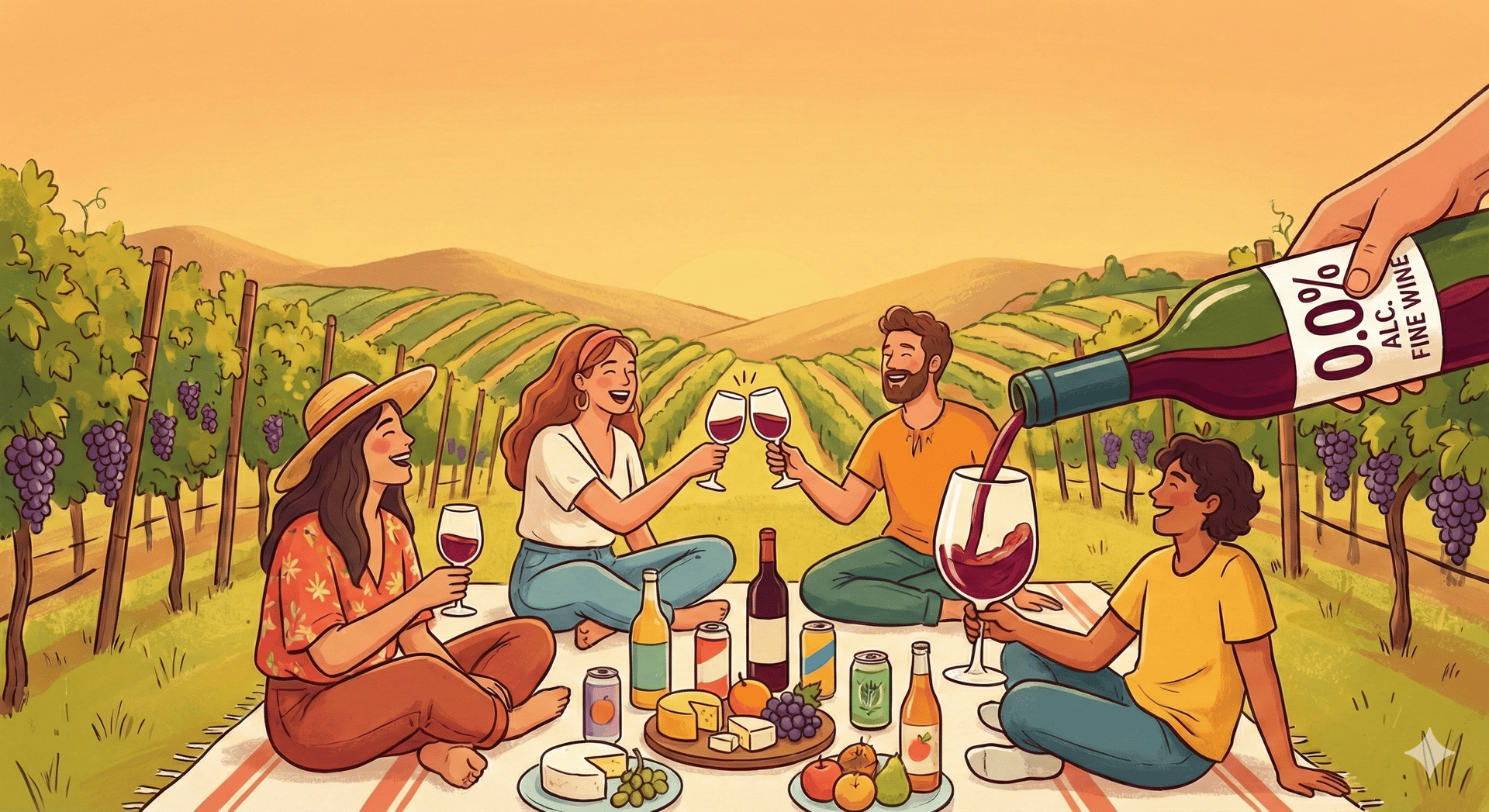
This trend is being driven by health-conscious consumers, athletes, and professionals who want to stay sharp but still enjoy the ritual of a glass of wine. In places like Italy and France, 0.0% wine is even showing up in premium vending machines in co-working spaces and gyms. It is the ultimate lifestyle drink: it contains the same healthy antioxidants (like resveratrol) as red wine, but it is "guilt-free" and inclusive for everyone at the table.
Conclusion: A New Way to Toast
Alcohol-free wine is no longer a substitute; it is a choice. As technology continues to close the "taste gap," we are seeing a future where 0.0% options sit proudly on the world’s best wine lists next to the legendary Châteaux. Whether you are doing "Dry January" or just looking for a more balanced lifestyle, the modern cellar has never been more welcoming. Cheers to a clear head and a great glass of wine!