


THE GRAPE ESCAPE
When to Harvest for the Perfect Wine
11/26/20252 min ler
Hey there, wine lover! Have you ever wondered what makes a great bottle of wine truly great? It all starts right here, in the vineyard, during what we call the grape harvest. This isn't just about picking grapes; it’s the definitive moment when all the hard work of the growing season pays off.
The timing of the harvest is the single most important decision a winemaker makes. Pick too early, and the wine might taste thin and sharp. Pick too late, and it could be jammy and lack balance. Getting it just right is truly an art!
Why is Harvest Timing the Biggest Deal? (Grape Maturity Explained)
Imagine a chef deciding when to take a cake out of the oven. Too soon? It’s raw. Too late? It’s burnt. In winemaking, the grapes are the "cake," and timing is everything.
The winemaker is looking for the perfect grape maturity, which is a balance between three key factors:
Sugar Levels (Brix): As grapes ripen, they accumulate sugar. This sugar is what the yeast will later convert into alcohol. High sugar equals higher potential alcohol.
Acidity Levels: Acidity is the freshness of the wine. It makes your mouth water and gives the wine its zip. As grapes ripen, acidity naturally decreases. The goal is to keep enough of it!
Phenolic Maturity: This is a fancy term for the ripeness of the tannins (in red wines) and the flavors in the skins and seeds. Green, unripe tannins can make a wine taste bitter and harsh. Ripe tannins are smooth and integrated.
A winemaker is constantly tasting the grapes and using tools to measure these levels to decide on the perfect day.
Hand-Picking vs. Machine Harvesting: Which is Better? (Wine Production Methods)
Once the decision is made, it’s time to get those grapes off the vine! There are two main ways the wine harvest is executed:
1. Hand-Picking (The Traditional Way)
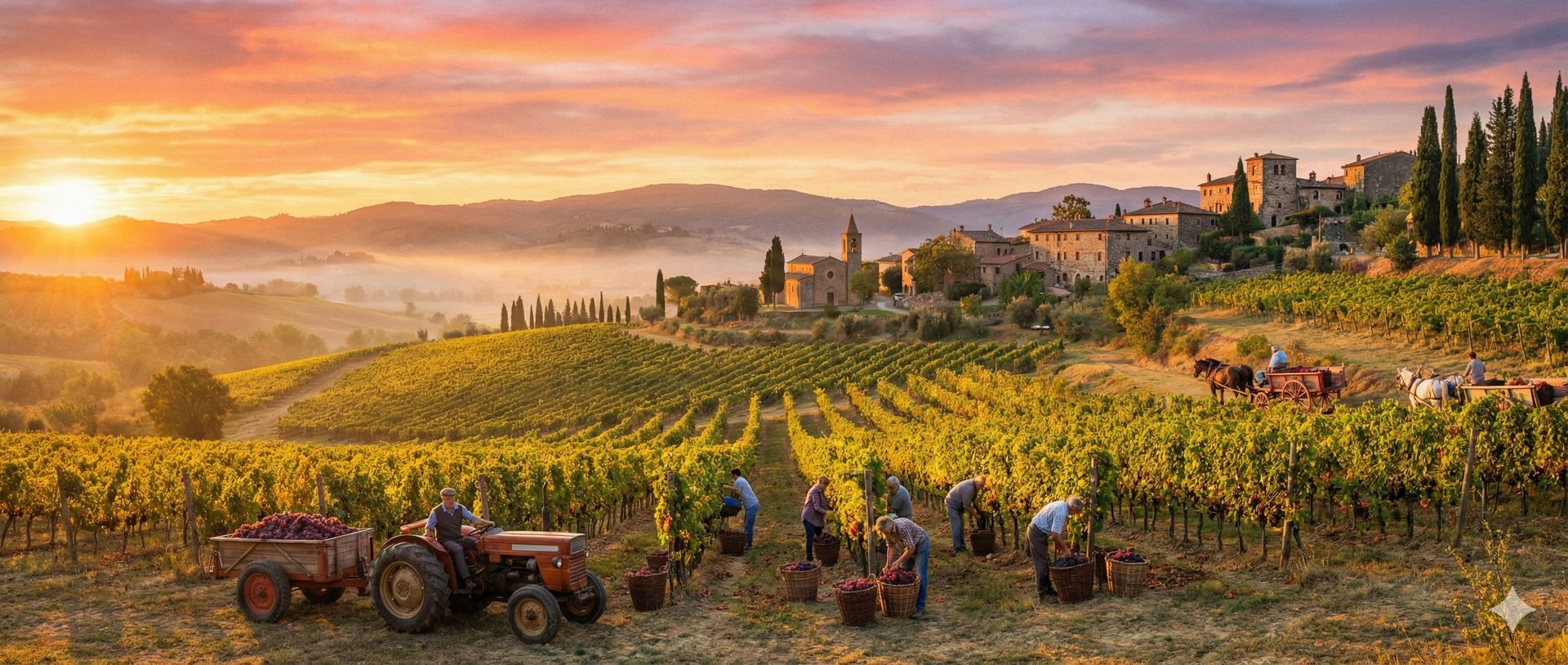
How it works: Crews of workers move through the rows, carefully cutting the grape clusters by hand.
Pros: It’s gentler on the grapes (minimizing early crushing). It allows for strict sorting, meaning only the healthiest clusters make it into the bin. It’s essential for delicate grapes (like those used for sparkling wine) or on steep, uneven terrain.
Cons: It’s slower and much more expensive due to labor costs.
2. Machine Harvesting (The Modern Efficiency)
How it works: A large machine straddles the row and uses rubber or fiberglass rods to gently shake or beat the vine, causing the ripe berries to drop onto a conveyor belt.
Pros: It’s incredibly fast (harvesting large vineyards overnight) and much cheaper. This speed is vital when a sudden rainstorm threatens the crop.
Cons: It’s less selective; the machine collects leaves, stems, and occasionally insects along with the grapes. It can be too rough on certain grape varieties.
For premium, high-quality wines, especially those with meticulous standards, manual harvesting is usually preferred.
When Does the Grape Harvest Happen? (The Wine Season)
The timing of the annual grape harvest depends entirely on where the vineyard is located:
Northern Hemisphere (e.g., USA, France, Italy): The harvest generally runs from August to October.
Southern Hemisphere (e.g., Chile, Australia, South Africa): The harvest takes place during their summer months, usually from February to April.
Remember, within these broad windows, the specific day varies every single year based on the local weather conditions, making the winemaker’s job an exciting, nerve-wracking gamble!
Conclusion: Ready for the Next Step
The harvest is just the first step in the amazing journey from grape to glass. Once the grapes are in the winery, the real fun—crushing, fermentation, and aging—begins!
For now, next time you pour a glass, take a moment to appreciate the precise timing and effort that went into picking those perfect little berries. Cheers!