

The Magic Bubble: Understanding Wine Fermentation
Where the Sugar Turns to Spirit
12/3/20252 min ler
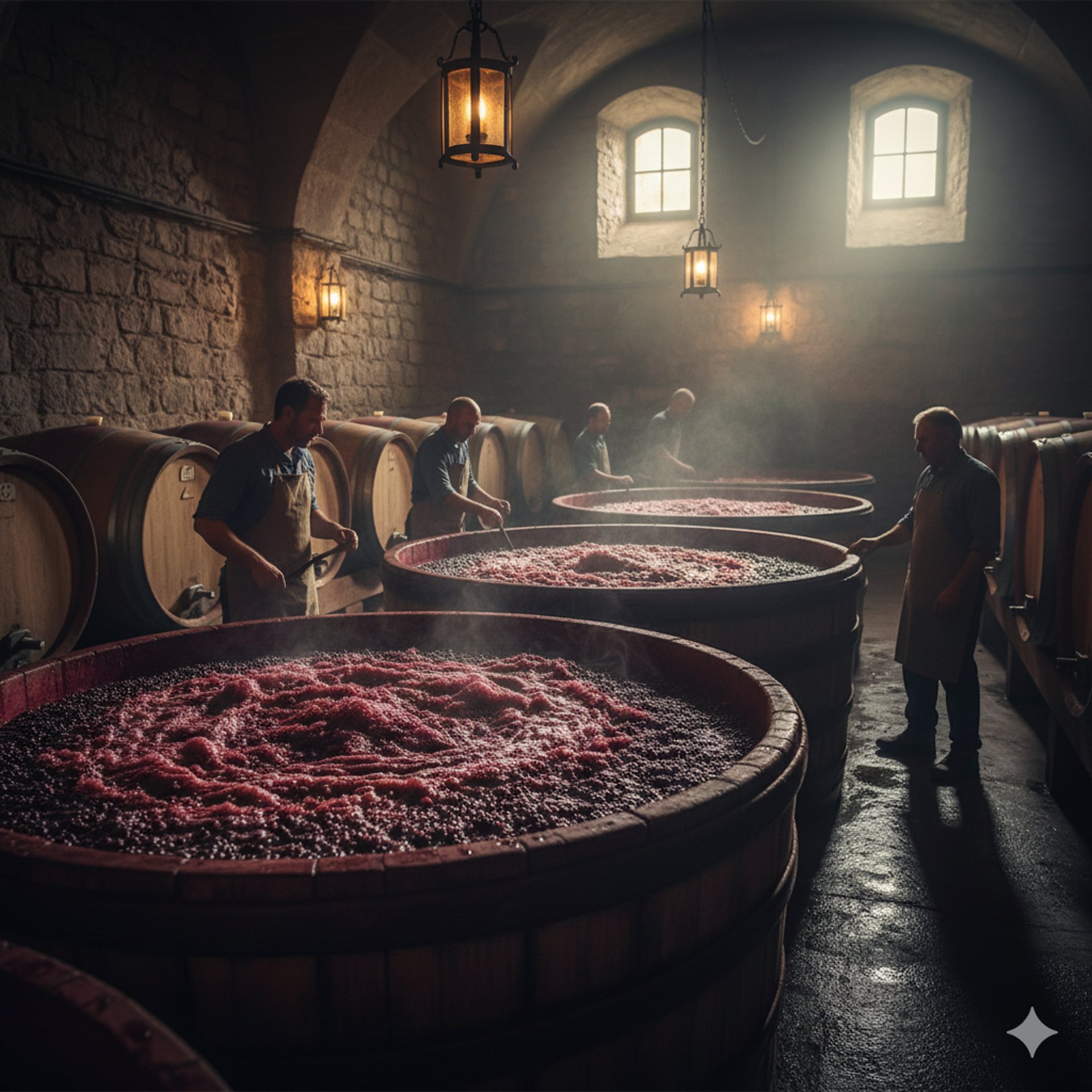
You've harvested the grapes, you’ve pressed the juice (at the right time!), and now comes the truly transformative step: fermentation. This is the vital chemical reaction that converts sweet grape juice (the "must") into alcoholic wine. It’s a process so fundamental that without it, you simply have grape juice!
Simply put, fermentation is the moment that makes wine, wine. It's a natural, bubbling process that is crucial to the wine's final taste, texture, and alcoholic content.
The Science Behind the Bubbles (Yeast and Alcohol)
So, how exactly does the magic happen? It all boils down to tiny, powerful microorganisms: yeast.
In winemaking, fermentation follows a simple (but amazing) chemical equation:
Sugar + Yeast >>> Alcohol + Carbon Dioxide + Heat
The Yeast Feast: Yeast cells consume the natural sugars (glucose and fructose) present in the grape must.
The Byproducts: As they eat, they excrete two main byproducts: Ethanol (the alcohol we enjoy) and Carbon Dioxide (CO2) (the bubbles you see and the gas that must be vented).
Heat Generation: The process also releases heat, which the winemaker must carefully manage to control the flavors.
The winemaker’s job during this phase is essentially to be a yeast shepherd, providing the perfect environment for them to work their magic.
Natural vs. Cultured Fermentation (The Yeast Choice)
Winemakers have a key choice to make: whether to use the wild yeast naturally present or to introduce a specific cultured strain.
1. Native/Wild Fermentation
This method uses ambient yeast that naturally lives on the grape skins or in the cellar environment.
Benefit: It adds complexity and unique, regional character (terroir) to the wine.
Challenge: It is less predictable. The fermentation can be slow, stall out, or, if the wrong species dominates, introduce off-flavors.
2. Inoculated/Cultured Fermentation
The winemaker selects a specific, cultured yeast strain and adds it to the must.
Benefit: It is highly reliable. It ensures a clean, fast, predictable fermentation and helps achieve specific desired flavor profiles (e.g., maximizing tropical notes).
Challenge: It can sometimes lead to wines that taste more "uniform" or less unique compared to wild-fermented versions.
Most commercial winemakers opt for cultured yeast for consistency and quality control, while many artisanal producers swear by the complexity of wild fermentation.
Controlling the Temperature: The Flavor Link
Fermentation generates a lot of heat, and temperature control is paramount. Winemakers use stainless steel tanks with built-in cooling jackets to manage the temperature precisely.
Cool Fermentations: Typically used for white wines and light reds (around $50^\circ\text{F}$ to $60^\circ\text{F}$). This preserves delicate, fruity, and aromatic notes (like citrus or floral notes).
Warm Fermentations: Essential for most red wines (around $70^\circ\text{F}$ to $85^\circ\text{F}$). The heat is necessary to efficiently extract color, flavor, and tannins from the grape skins during the process.
When Does Fermentation Stop? (Residual Sugar)
Fermentation usually stops when one of two things happens:
The Yeast Run Out of Food: The yeast has consumed all the available sugar. This results in a "dry" wine (meaning little to no residual sugar).
The Yeast Die: The alcohol level becomes too high (around 15-18% ABV, depending on the yeast strain), creating a toxic environment for the yeast.
The winemaker can also deliberately stop the process early (by chilling the must or adding sulfur) to leave some sugar behind, resulting in a sweet wine.
Conclusion: The Wine is Born!
Congratulations! Once fermentation is complete, you officially have wine! It might be young and rough around the edges, but the fundamental transformation is done. Now, the wine is ready for its education in refinement, which often involves aging and conditioning. Next up: we’ll see what happens after the bubbling stops!