

The Michelin "Wine Grape" Stars
A New Era for Wine Tourism
2/8/20262 min ler
The Red Guide Goes Green
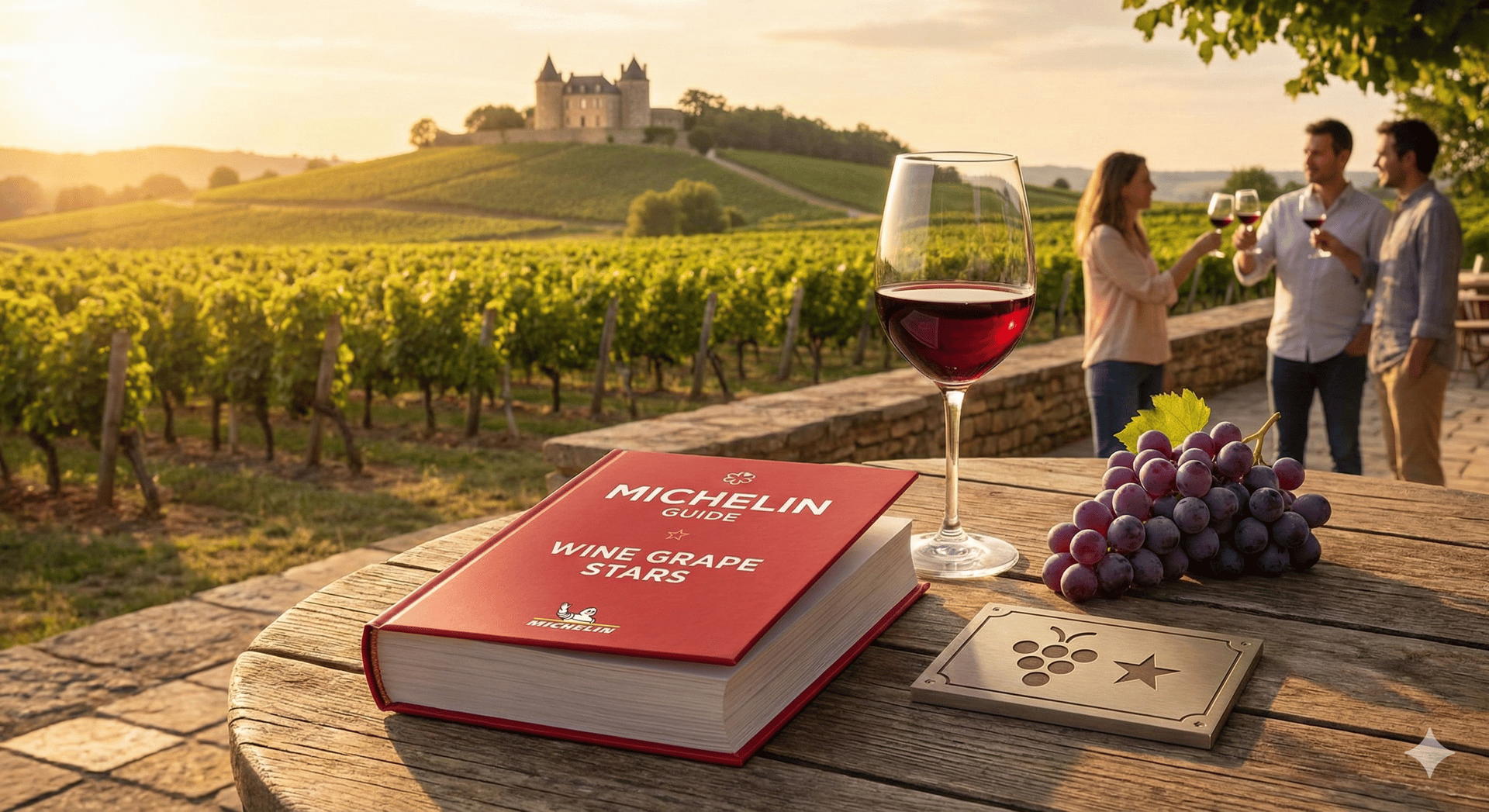
For over a century, the Michelin Star has been the ultimate goal for chefs and restaurateurs. But in a historic move, the famous "Red Guide" has officially expanded its territory. As of 2026, the Michelin Guide has introduced its first-ever rating system dedicated exclusively to wineries: the Michelin Grapes.
This isn't just about how the wine tastes—critics and sommeliers already do that. Instead, the Michelin Grapes evaluate the entire "Estate Experience." It looks at the architecture, the hospitality, the educational value of the tours, and how the winery integrates with its local environment. For the modern traveler, this is the new "gold standard" for planning a wine journey.
The System: From One to Three Grapes
Similar to the restaurant stars, the wine rating is divided into three tiers of excellence:
One Grape: A high-quality winery experience. It is worth a stop if you are in the area. These estates offer professional tours, beautiful tasting rooms, and consistent excellence in hospitality.
Two Grapes: Exceptional hospitality. A winery that is "worth a detour." These estates often feature unique architecture, historical significance, or incredible food pairings that elevate the tasting.
Three Grapes: A world-class destination. This is a winery "worth a special journey." These rare estates represent the pinnacle of luxury, sustainability, and artistic expression, offering an experience that is unforgettable even before you take your first sip.
Why Now? The Rise of "Experiential" Luxury
The wine world has realized that today’s consumers aren't just buying a bottle; they are buying a memory. In regions like Bordeaux, Tuscany, and Napa Valley, wineries have transformed into cultural hubs featuring art galleries, Michelin-starred restaurants, and eco-luxury hotels.
The Michelin Grapes recognize that a visit to a place like Château Cheval Blanc or Antinori nel Chianti Classico is about more than just fermented juice. It is about the harmony between the land, the history, and the human craft. The Guide is now rewarding estates that invest in preserving their heritage while providing a modern, welcoming atmosphere for visitors.
Sustainability as a Requirement
You cannot earn a Michelin Grape if you aren't looking after the planet. In 2026, the Guide has made environmental responsibility a core part of its criteria. To receive a high rating, wineries must demonstrate active conservation efforts, such as organic or regenerative farming, carbon-neutral production, or innovative water-saving technologies. For Michelin, a "three-grape" estate must be a leader in protecting the very soil that makes its wine possible.
The Impact on Global Travel
The introduction of this system is already shifting the maps of wine tourism. While the first "Grape" ratings were concentrated in France and Italy, the Guide has quickly expanded to the New World.
For the first time, smaller, family-owned estates in regions like Uco Valley (Argentina) or Stellenbosch (South Africa) are finding themselves in the global spotlight, attracting a new wave of international travelers who trust the Michelin brand. It is democratizing wine fame, proving that a small, innovative winery can be just as prestigious as a centuries-old castle.
Your New Travel Compass
The Michelin Grapes have changed the conversation from "Which wine should I buy?" to "Where should I go?" By adding this layer of prestige to the physical estate, Michelin has given wine lovers a new compass for their adventures. Whether you are seeking a sustainable family farm or a futuristic architectural masterpiece, the Grapes ensure that your next wine trip will be nothing short of extraordinary. The cellar door has never been more open.