

The Oak Barrel: The Soul and Structure of Aging
2/17/20262 min read
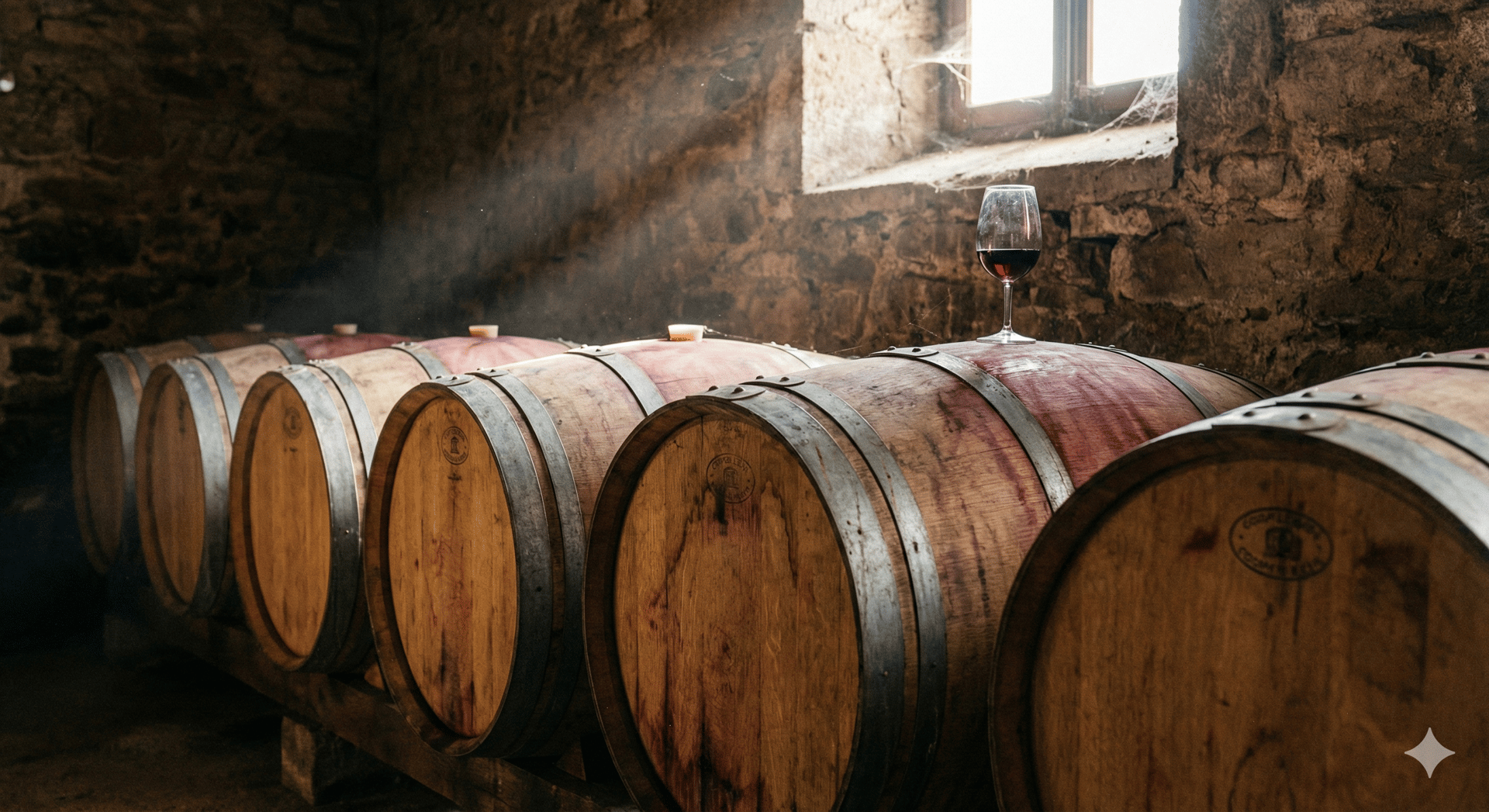
In the history of winemaking, barrels were originally used simply because wood was the most durable material for transporting wine across the Roman Empire. However, over time, winemakers noticed that wine kept in oak didn't just survive the journey—it improved.
Today, we use oak for three fundamental reasons: it allows for micro-oxygenation, it adds flavor and aroma, and it modifies the texture and stability of the wine. Choosing the right barrel is like a chef choosing the perfect spice: too little, and the wine is simple; too much, and the soul of the fruit is lost under a "plank" of wood.
The Physics of Micro-Oxygenation
A barrel is not perfectly airtight. Because wood is porous, it allows for a tiny, controlled amount of oxygen (O2) to seep through the staves (the wooden planks) and reach the wine.
This slow "breathing" process is vital. It helps the tannins—the compounds that give red wine its "grip"—to bind together into longer chains in a process called polymerization. This makes the wine feel smoother and less astringent on the palate. It also stabilizes the color, ensuring that a deep ruby red doesn't turn brown too quickly.
The Chemistry: What Oak Adds to the Mix
When wine sits in a barrel, it acts as a solvent, extracting chemical compounds from the wood. The most famous of these include:
Vanillin: The compound that gives wine its classic vanilla aroma.
Lactones: These contribute "woody" notes and, in certain types of oak, a distinct aroma of coconut.
Eugenol: Responsible for spicy notes like clove and cinnamon.
Guaiacol: Created during the "toasting" of the barrel, adding smoky, roasted, or coffee-like characters.
French vs. American Oak: A Botanical Choice
Not all oak is created equal. The two most common species used in winemaking offer very different results:
French Oak (Quercus robur and Quercus petraea): These trees grow slowly in cool forests like Allier or Vosges. The grain is very tight, meaning oxygen enters more slowly. French oak is prized for its elegance, providing subtle spice and silky tannins. It is the choice for icons like the Bordeaux blends or Burgundy Pinot Noir.
American Oak (Quercus alba): Growing faster in warmer climates, American oak is more porous and contains much higher levels of lactones. This results in a "bolder" profile with intense aromas of vanilla, coconut, and dill. It is a traditional favorite in regions like Rioja and for some bold Australian Shiraz.
The Art of the Toast
During the coopering process (making the barrel), the inside of the wood is heated over an open fire. This is called toasting. The level of toast changes the chemical structure of the wood:
Light Toast: Preserves the natural "wood" flavor and provides more tannin structure.
Medium Toast: The sweet spot for most winemakers, highlighting vanilla, caramel, and almond.
Heavy Toast: Creates deep, dark flavors of charcoal, espresso, and burnt sugar.
Size Matters: Surface Area vs. Volume
The size of the vessel dictates the "wood-to-wine" ratio. A standard Barrique (225L) has a large surface area of wood in contact with a relatively small volume of wine, leading to a faster and more intense flavor extraction. In contrast, giant wooden vats called Foudres can hold thousands of liters, providing the benefits of micro-oxygenation with almost no "woody" flavor, allowing the pure fruit of the grape to shine.
The Delicate Balance
The ultimate goal of using oak is balance. A great winemaker uses the barrel to support the fruit, not to mask it. Whether it is a "Cult Cabernet" using 100% new French oak for power or a delicate white wine using older, "neutral" barrels for texture, the oak is the bridge between the raw potential of the vineyard and the refined complexity of the glass. It is a partnership between the forest and the vine, moderated by the precision of the cellar.