

Time Well Spent: Why and How Winemakers Age Their Wine
The Maturation Phase
12/4/20252 min ler
The fermentation is complete, the yeast have done their job, and you now have young, vibrant (but potentially rough) wine. The next critical stage is aging, or maturation.
Aging is the patient waiting game where a young, primary liquid transforms into a complex, integrated beverage. It’s the period of rest that allows the wine’s flavors to harmonize, tannins to soften, and character to deepen.
Why Age the Wine? (Benefits of Maturation)
Aging the wine, whether for a few months or several years, provides crucial benefits to the final product:
Softening Tannins: Especially important for red wines, aging exposes the harsh, angular tannins to tiny amounts of oxygen, which polymerizes them (makes them clump together). This results in a smoother, rounder mouthfeel.
Flavor Integration: The primary flavors (fruit) and secondary flavors (from yeast) meld together, creating a more cohesive and complex taste profile.
Stability: Aging helps sediment (spent yeast cells and particles) settle out naturally, resulting in a clearer, more stable wine.
Color Development: Red wines lose some of their harsh purple hue and develop brick-red or garnet tones. White wines tend to deepen in color, moving towards gold.
The Oak Factor: Barrel Aging and Flavor
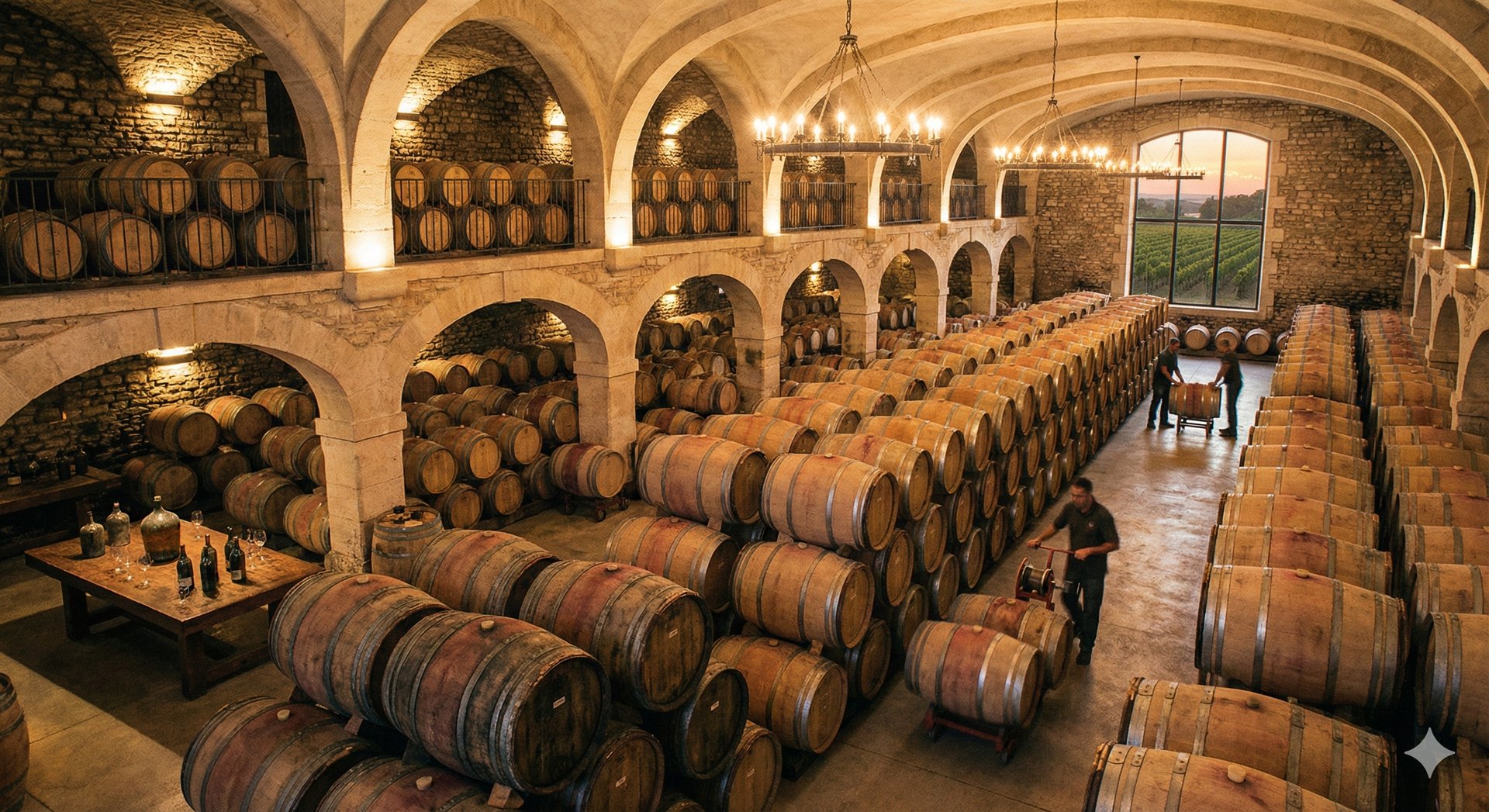
When people talk about wine aging, they often think of oak barrels. This traditional method does more than just hold the wine; it actively contributes to its flavor and texture.
What Oak Barrels Add
Flavor Compounds: Oak imparts recognizable aromas and flavors to the wine, such as vanilla, clove, coconut, toast, and smoke.
Controlled Oxygen Exposure: Oak is slightly porous. Over time, minute amounts of oxygen seep through the wood, triggering the softening of tannins mentioned above.
Texture: Compounds extracted from the wood can give the wine a richer, creamier mouthfeel.
Barrel Choices Matter (New vs. Used, French vs. American)
New Oak: Imparts the maximum amount of flavor. It’s expensive and often used for premium wines where a strong oak influence is desired.
Used Oak: Imparts very little flavor but still allows for the beneficial, controlled oxygen exchange.
French Oak: Tighter grain, imparting subtler flavors (spicy, cedar).
American Oak: Looser grain, imparting more pronounced flavors (vanilla, coconut).
Alternatives to Oak: The Neutral Approach
Not all wines benefit from oak flavor. Many white wines and lighter red wines are aged in neutral vessels to preserve their fresh, fruity character.
1. Stainless Steel Tanks
Purpose: Zero oxygen contact. This is the ideal choice for crisp, aromatic wines (like Sauvignon Blanc or light Pinot Grigio) where the goal is to retain vibrant fruit and high acidity.
Result: Wines that taste pure, clean, and dominated by primary fruit flavors.
2. Concrete Vessels
Purpose: Very low oxygen exchange, similar to a large oak barrel, but imparts no flavor.
Result: Provides stability and smoothness without the vanilla or toast notes associated with wood.
Conclusion: Ready for the Bottle!
Whether aged in stainless steel for three months or in new French oak for three years, the maturation phase is vital for creating depth and balance. Once the winemaker deems the wine ready—meaning all its elements are harmonious—it's time for the final step: getting it into the bottle and onto your table!