

Chardonnay: The Winemaker’s Chameleon
GRAPES
3/4/20263 min ler
The Versatile Legend
Chardonnay is arguably the most famous white grape in the world, and for a good reason: its versatility. Unlike some grapes that have a very rigid "personality," Chardonnay is a chameleon. Depending on where it is grown and how it is treated in the cellar, it can range from a lean, mineral, and sharp wine to an indulgent, rich, and luxurious experience.
Think of Chardonnay like a high-quality white shirt: it can be casual and crisp for a day at the beach, or structured and elegant for a formal dinner. It is this ability to adapt that has made it a global favorite, from the cool hills of France to the sun-drenched valleys of California and Australia.
The Botany of Adaptability
From a cultivation perspective, Chardonnay is a winemaker's dream because it is incredibly "malleable." It is an early-budding variety, which makes it sensitive to spring frosts, but it thrives in a wide range of climates and soils.
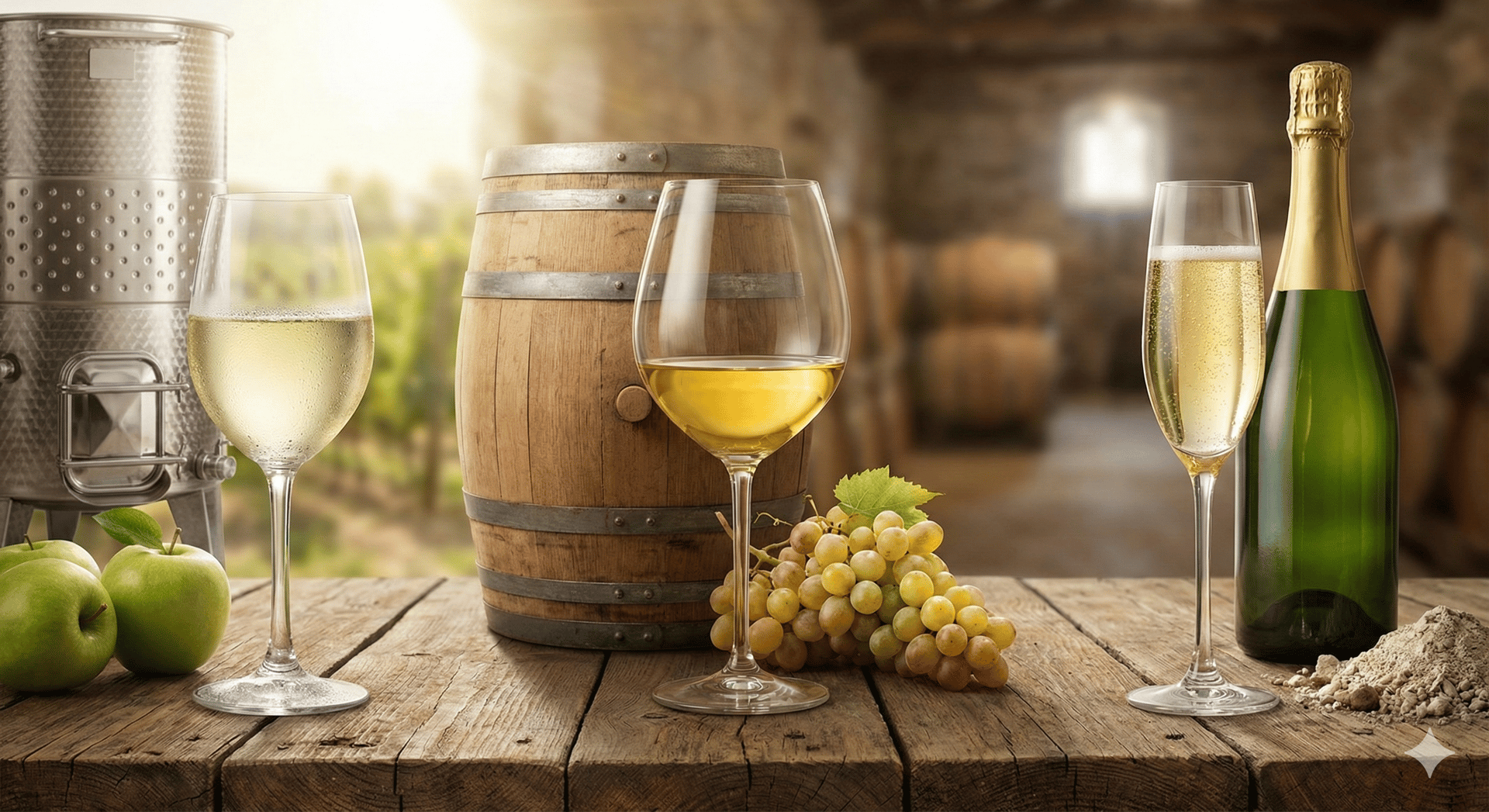
Climate Impact: In cool climates (like Chablis, France), it retains high acidity and flavors of green apple and citrus. In warmer climates, such as the California interior, the acidity decreases, and flavors evolve into tropical fruits like pineapple and mango.
The Soil "Blueprint": Chardonnay is famous for expressing its terroir. In limestone-rich soils, it often develops a distinct chalky or flinty minerality that is prized by enthusiasts worldwide.
The Winemaker’s Canvas: Oak and Malolactic Fermentation
What makes Chardonnay truly unique is how much it can be influenced by decisions made in the cellar. Two technical processes define its style:
Malolactic Fermentation (MLF): This is a process where sharp malic acid (the kind found in green apples) is converted into softer, creamier lactic acid (the kind found in dairy). This is what gives many Chardonnays that famous "buttery" texture and flavor.
Oak Aging: Chardonnay has a natural affinity for oak. The wood doesn't just add flavor; it introduces tannins and oxygen, creating notes of vanilla, toasted bread, and hazelnut. When a Chardonnay is "unoaked" (aged in stainless steel), it stays bright, floral, and zingy.
The Chemical Signature: From Lemons to Butter
The aromatic profile of Chardonnay is often divided into what the grape provides (Primary) and what the process provides (Secondary):
Primary Aromas: Lemon zest, green apple, pear, and sometimes white peach or tropical fruits.
Secondary Aromas: This is where the "magic" happens. Notes of butter, brioche, roasted almonds, and vanilla are all results of the winemaker's decisions during fermentation and aging.
Global Expressions: A Tale of Two Styles
The Cool and Mineral (The Chablis Style): Clean, high acidity, and focused on citrus and stones. It’s a precise wine that feels like a cold mountain stream. It rarely sees new oak, letting the soil speak for itself.
The Rich and Opulent (The New World Style): Full-bodied, creamy, and golden. These wines, common in parts of California and Australia, feature bold fruit and a long, velvety finish, often enhanced by high-quality oak.
Pairing: Texture Meets Taste
Because Chardonnay can vary so much in body, its pairing potential is enormous. The secret is matching the "weight" of the wine with the "weight" of the food.
For Crisp, Unoaked Chardonnay: Light seafood, fresh salads, or goat cheese. The acidity acts as a "palate cleanser."
For Rich, Oaked Chardonnay: This is where the wine shines with creamier dishes. Think of roast chicken, pasta with Alfredo sauce, or lobster with drawn butter. The richness of the wine stands up to the richness of the food.
The Global Favorite: Roasted poultry with herbs. The savory notes of the chicken and the aromatic herbs create a perfect bridge to the wine's fruit and oak layers.
The Ultimate Evolution
Chardonnay remains a cornerstone of the wine world because it never stops evolving. It is a grape that rewards exploration—one day it’s a refreshing sparkler (it is one of the main grapes in Champagne), the next it’s a complex, age-worthy white that can stand toe-to-toe with the world's best reds. For those who appreciate the balance between nature’s raw materials and human intervention, Chardonnay is the ultimate study in liquid potential.