

Discovering Rioja
Spain's Iconic Wine Region Explained
REGIONS
3/10/20264 min read
From ancient vineyards to modern cellars, here is everything you need to know about the wines of Rioja.
When you think of Spanish red wine, one name almost certainly leaps to mind: Rioja. It is the undisputed king of Spanish viticulture, the first region to be awarded the prestigious Denominación de Origen Calificada (DOCa) status. For decades, Rioja has set the standard for elegance, complexity, and remarkable aging potential. But what exactly makes this region so special? Like a great story, Rioja is defined by its landscape, its grapes, and a unique tradition of patience in the cellar.
A Tale of Three Sub-regions: Where the Magic Happens
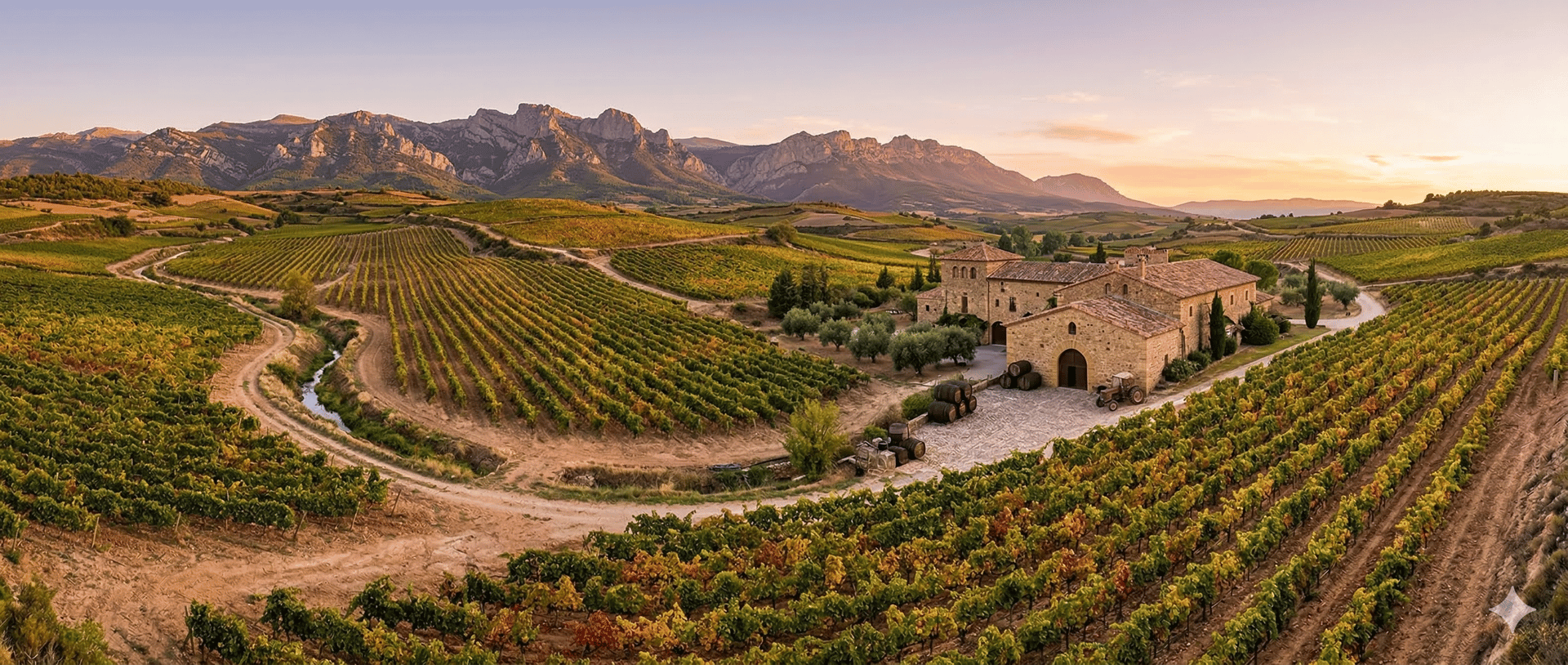
Rioja isn't a single, uniform vineyard. It is a diverse tapestry woven from three distinct sub-regions, each contributing its own personality to the final blend. Think of them as the different neighborhoods of a sprawling, wine-obsessed city, each with its own vibe.
Rioja Alta: This is the elegant heart of the region. Located at higher altitudes (hence the 'Alta') with iron-rich clay soils, Rioja Alta produces wines known for their bright acidity, refined structure, and incredible aging capacity. When you taste a Rioja that feels light on its feet but complex, chances are it's Alta-dominant.
Rioja Alavesa: Technically part of the Basque Country, Alavesa shares much of Alta’s climate but benefits from distinct limestone and clay soils. These vineyards, tucked beneath the dramatic Cantabrian Mountains, produce wines with vibrant fruit, finesse, and distinctive floral notes. They are the dancers of the region—graceful and precise.
Rioja Oriental: Formerly known as Rioja Baja, this eastern sub-region has a much warmer, Mediterranean influence. The soils are alluvial, and the wines are generally richer, riper, and higher in alcohol. If a Rioja blend needs body and roundness (like a warm hug), it looks to Rioja Oriental for that necessary warmth.
The Grapes That Define Rioja
While the blending of these sub-regions is an art form, Rioja is also defined by a handful of star players. When you drink Rioja, you are almost always drinking Tempranillo. This thick-skinned grape is the backbone, providing structure, tannins, and flavors of black cherry, plum, and tobacco.
However, Tempranillo is rarely alone. In Rioja, blending is traditional. The supporting cast includes:
Garnacha (Grenache): Used mainly in Rioja Oriental to add body, warmth, and bright raspberry notes.
Graciano: A rare but prized grape that adds intense aroma, deep color, and vibrant acidity. It’s like adding a pinch of high-quality spice to a dish.
Mazuelo (Carignan): A minor player used to add tannic structure and color, helping the wines age.
(Rioja also produces whites and rosados, or ‘Rosés’, primarily using Viura and Tempranillo Blanco, but the reds are the region’s defining signature.)
The Soul of the Oak: Decoding the Aging Labels
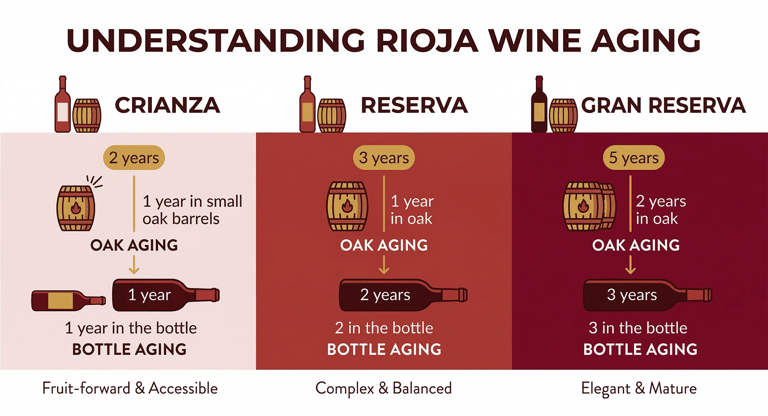
Perhaps the most famous—and initially confusing—aspect of Rioja is its rigid aging classification system. While most regions label their wine by the grape (e.g., Cabernet Sauvignon) or the specific vineyard, Rioja labels its wine by how long it rested in the cellar. This is crucial because Rioja believes the final flavor profile is defined by patience and oak interaction.
This classification isn't just about time; it’s about style. Here is how to understand those labels:
Rioja (Generic or ‘Joven’): These are young wines with minimal to no oak aging. They are bright, fruit-forward, and intended to be consumed quickly. They are the fresh-faced teenagers of the Rioja family.
Crianza: This is the workhorse of Rioja and often the best value. A Crianza red must age for a minimum of two years, with at least one of those years in oak barrels. They balance juicy fruit flavors with subtle notes of vanilla and spice. They are reliable and friendly, like your favorite everyday sweater.
Reserva: This is where things get serious. A Reserva red must age for a minimum of three years, with at least one year in oak. Crucially, these are made only from selected vintages that can withstand this prolonged aging. They are complex, balanced, and showcase a harmony of fruit and elegant secondary notes like leather and tobacco.
Gran Reserva: This is the pinnacle, made only in exceptional vintages. It requires a massive minimum of five years of aging—at least two in oak barrels and three in the bottle—before it can be sold. These are wines of profound elegance, softness, and tertiary complexity (dried fruit, spice, earth, cedar). They have been patient, and they reward your patience in return.
Traditional vs. Modern: The Evolution of Style
If you are a Rioja history buff, you might know that the region was traditionally defined by its heavy use of American oak barrels. This practice—introduced via relationships with Bordeaux winemakers fleeing phylloxera—gave classic Rioja its signature flavors of coconut, strong vanilla, and a distinctly soft, often oxidized, profile.
Today, Rioja is in an exciting state of evolution. Modern winemakers are increasingly experimenting with:
French Oak: Which imparts more subtle spice, tannin, and structural elegance compared to American oak.
Shorter Extraction and Less Oxidation: To emphasize fresh fruit and terroir over oak influence.
Single-Vineyard Wines (Viñedos Singulares): Shifting focus away from blending the entire region and highlighting the unique character of one specific plot of land, mirroring the Burgundian model.
This means you can now find two bottles of Rioja Reserva side-by-side that taste radically different: one soft, coconut-driven, and traditional; the other structured, fruit-driven, and modern.
Pairing: What to Eat with Your Rioja
Rioja’s signature acidity and structure make it an incredible food wine. The golden rule? Match the aging style to your meal:
Crianza: Pairs beautifully with the local tradition of tapas (or pinchos in the Basque zones). Think cured meats (jamón!), mushroom skewers, or a classic Spanish tortilla.
Reserva: This is the ultimate partner for roasted meats. Its acidity cuts through fat, making it perfect for roast lamb, grilled steak, or a rich pork tenderloin.
Gran Reserva: These aged beauties are delicate. They need simpler, earthy flavors to let their complexity shine. Try them with aged cheeses (like Manchego) or sophisticated dishes featuring truffle or game.
A Region of Patience
Rioja is special because it values the dimension of time. In a world of instant gratification, Rioja insists that some things—the integration of oak, the softening of tannins, the development of complex aromas—cannot be rushed. When you open a bottle of aged Rioja, you aren’t just drinking fermented grape juice; you are tasting years of patience, history, and a landscape that refuses to be forgotten.