

Douro Red Blend
Why Portugal’s Famous Red Blend is a Masterpiece of Survival
WINEMAKING
4/6/20263 min read
For decades, if you mentioned the Douro Valley to a wine lover, their mind jumped straight to Port. And while that fortified liquid gold is legendary, there is a quiet revolution that has moved from the sidelines to center stage: Douro DOC still red wines.
These are wines born from adversity. Imagine a place so steep and rocky that vines shouldn't thrive, yet they do. The typical Douro red blend is a bottled reflection of this landscape—complex, powerful, and deeply historic. But what exactly makes a "typical" blend, and why does this region insist on mixing grapes instead of letting one star shine alone?
The "Field Blend" Philosophy: A Historical Safety Net
To understand the Douro, we have to look back at how vineyards were planted a century ago. Farmers didn’t plant a single row of one grape and a row of another. Instead, they practiced "field blending." They planted dozens of different varieties all mixed together in the same plot.
Think of it like a high school choir. If one singer has a sore throat (or in this case, if one grape variety suffers from a late frost), the rest of the group carries the melody. This was the ultimate insurance policy against the unpredictable Mediterranean climate. Today, even as modern winemakers plant specific blocks, that "choir" mentality remains. A Douro red is rarely a solo act; it is a symphony where the whole is much greater than the sum of its parts.
The Power Trio: Meet the Grapes
While over 80 grape varieties are permitted in the region, the typical red blend usually leans on a "Big Three." Understanding these is like knowing the primary colors of a painting.
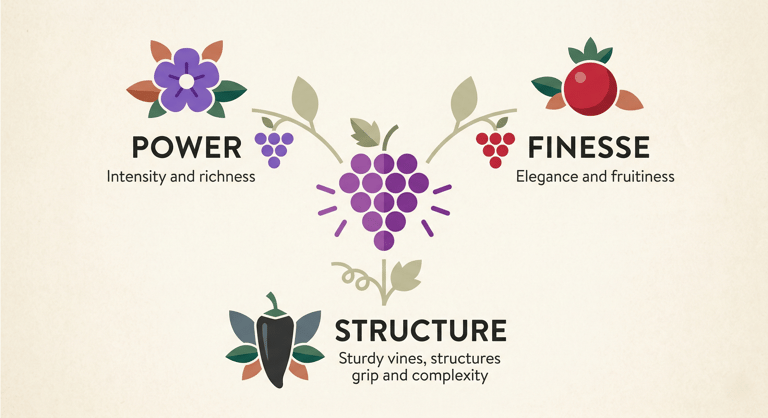
Touriga Nacional: This is the undisputed King. If this grape were an athlete, it would be a heavyweight champion who also happens to be a ballet dancer. It provides deep color, massive tannins (the structure), and a distinct floral aroma—specifically violets. It’s the backbone of the blend.
Touriga Franca: If Nacional is the strength, Franca is the finesse. It is the most widely planted grape in the valley because it loves the heat. It adds "flesh" to the wine, bringing juicy red fruit flavors and an herbal complexity that keeps things interesting.
Tinta Roriz: You might know this grape by its Spanish name, Tempranillo. In the Douro, it provides the "spice." It adds a touch of pepper, tobacco, and elegant acidity that ensures the wine feels fresh on your palate rather than heavy.
Other supporting actors like Tinta Barroca (for sugar and softness) and Tinto Cão (for longevity) often make appearances, but the interplay between the first three defines the Douro style.
Schist: The Secret Ingredient Underfoot
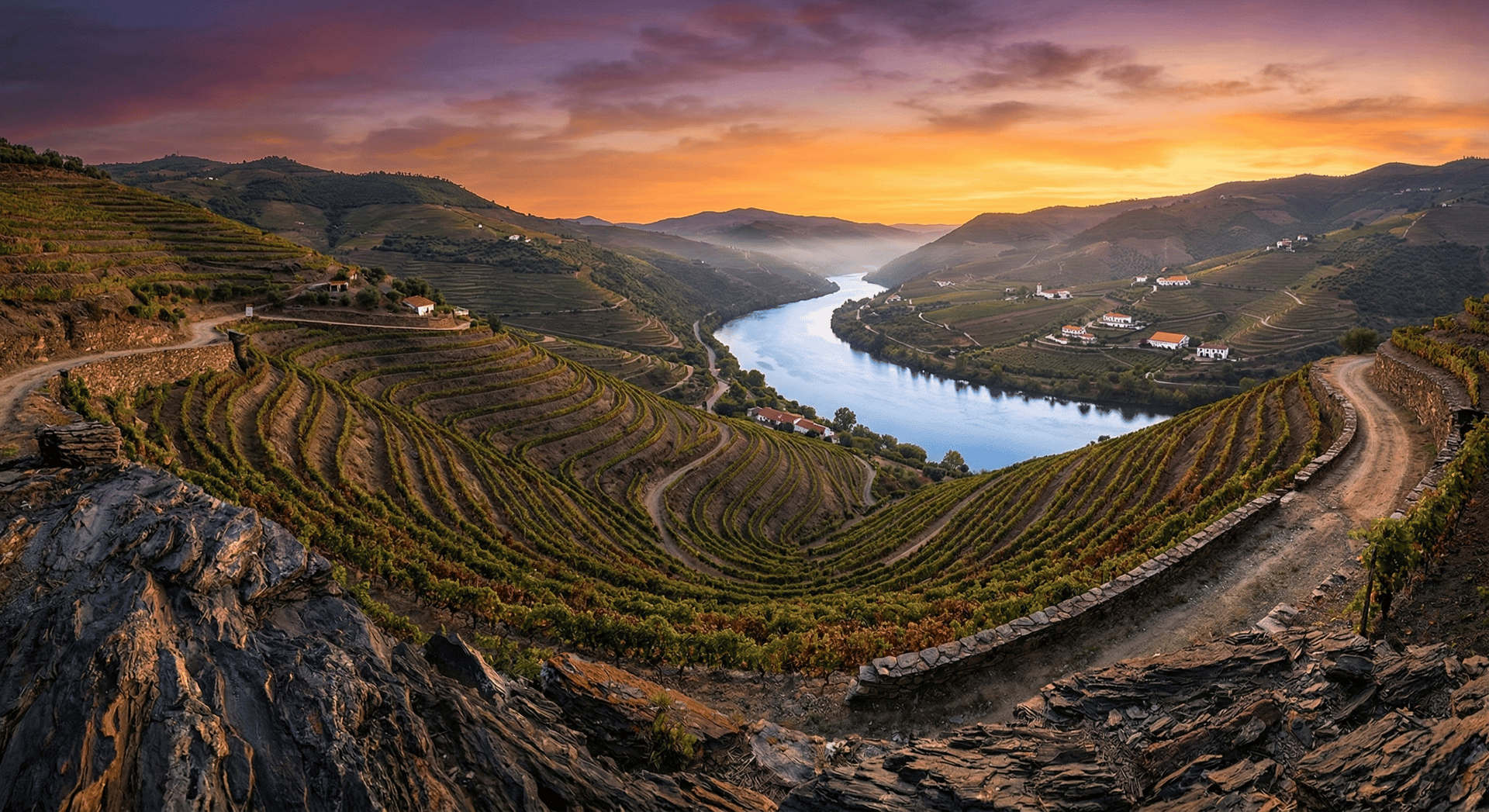
You can’t talk about the Douro blend without talking about the dirt—or rather, the lack of it. The valley is made of schist, a flaky, slate-like rock.
Imagine trying to grow a plant in a pile of broken dinner plates. That is essentially what these vines deal with. The schist forces the vine roots to drill deep—sometimes up to 30 feet—into the vertical cracks of the rock to find water. This struggle is exactly what makes the wine taste so concentrated. The rocks also act like a giant radiator, soaking up the brutal sun during the day and radiating that heat back to the grapes at night. This "sun-on-stone" effect is why Douro reds have that signature "warm" and stony mineral finish.
Why Blend? The Science of Balance
In places like Napa or Burgundy, single-varietal wines (100% Cabernet or 100% Pinot Noir) are the standard. So why does the Douro stick to the blend?
It comes down to balance and resilience. The Douro is one of the most climatically extreme wine regions on earth. One year might be bone-dry; the next might see torrential rain. By blending, winemakers can adjust the "recipe" every year. If the Touriga Nacional is too intense, they add more Touriga Franca to soften it.
The result is a wine that feels "complete." You get the dark fruit, the floral perfume, the spicy kick, and the grippy tannins all in one glass. It’s a complete meal versus a single ingredient.
Modern Methods: From Foot Treading to High-Tech
Even though the grapes are ancient, the techniques are a mix of "The Flintstones" and "The Jetsons." In many top quintas (estates), the grapes for these premium blends are still trodden by foot in stone tanks called lagares.
It sounds primitive, but human feet are the perfect tools; they are strong enough to crush the skins but soft enough not to break the bitter seeds inside. Today, many winemakers use robotic lagares that mimic the human touch, combining tradition with 21st-century precision. This gentle extraction is why a Douro red can be "big" without being "bitter."
What to Expect in Your Glass
When you crack open a bottle of Douro Red, don't expect a shy wine. Expect a deep, almost opaque purple color. You’ll likely smell blackberries, wild rockrose (a local shrub), and a hint of vanilla if it’s been aged in oak. On the first sip, it will feel bold and mouth-filling, but with a surprising streak of acidity that makes you want to take a second sip—and then find some grilled lamb or a hard cheese to pair with it.
The Douro Red Blend is more than just a drink; it is a liquid map of a valley that refused to be tamed. It is history, survival, and artistry, all poured into a single glass.